A missed concrete pour, an unanswered question about plumbing rough-in, or a finish crew arriving before a wall is ready can quickly become expensive when you own a home from another country. The question of in-house crews versus subcontractors is not simply about how a builder staffs a project. It determines who is responsible for quality, who coordinates the work each day, and who answers the phone when a decision cannot wait.
For U.S. and Canadian owners building in Los Cabos, that structure deserves close attention. A luxury home in Palmilla, Puerto Los Cabos, Querencia, Pedregal, or the East Cape involves far more than framing and finishes. It requires architectural coordination, engineering, electrical and plumbing systems, waterproofing, pool construction, solar planning, permits, inspections, and disciplined jobsite management. The more moving parts there are, the more valuable direct control becomes.
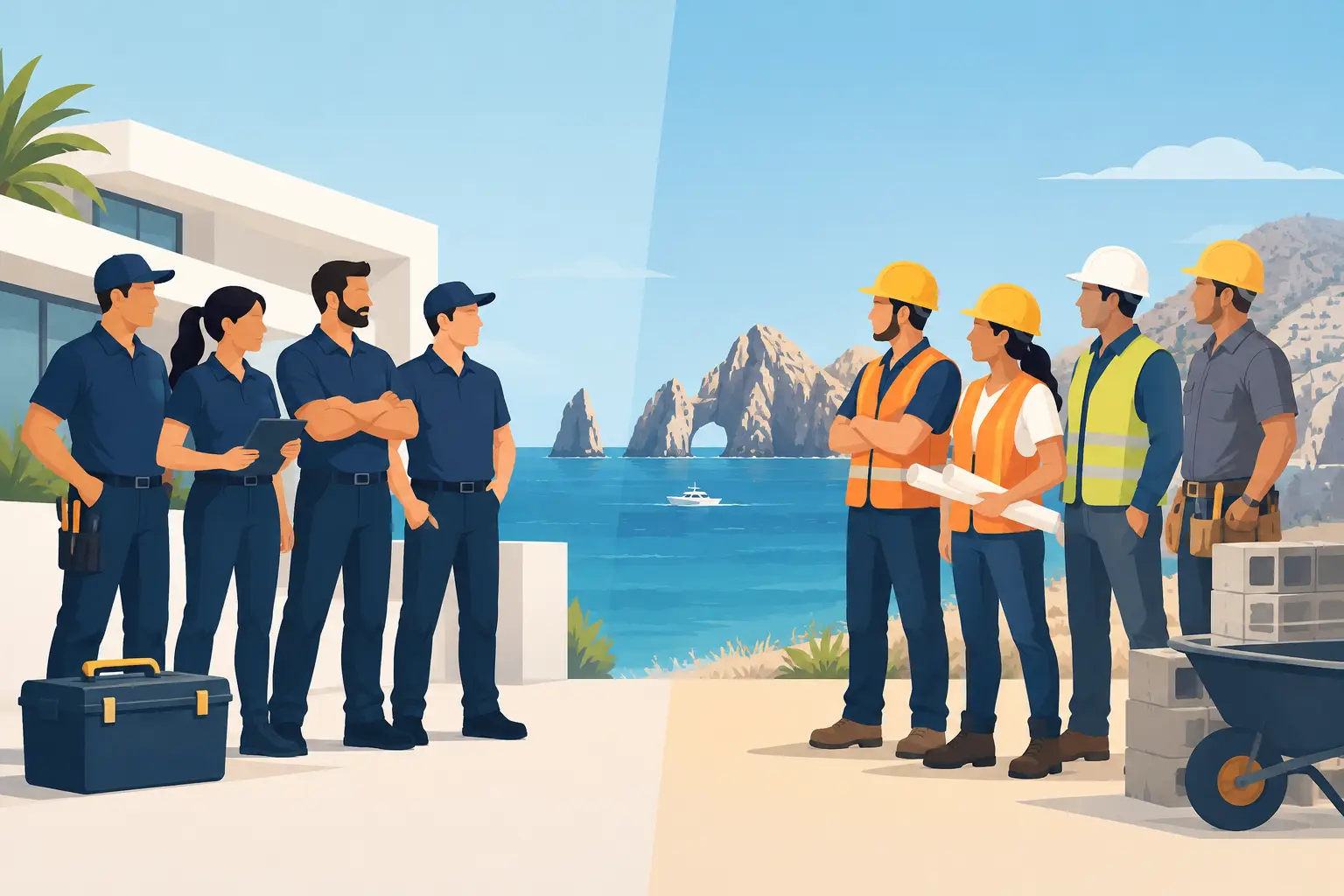
In-House Crews Versus Subcontractors: What Changes
A subcontractor model is common in construction. A general contractor hires separate outside companies or independent trades for excavation, concrete, electrical, plumbing, tile, cabinetry, pool equipment, and other scopes. A capable general contractor can deliver excellent results this way, particularly when it maintains long-term relationships with proven specialty firms.
The trade-off is control. Each subcontractor has its own supervisor, availability, priorities, labor force, and interpretation of the scope. The general contractor must constantly coordinate the handoff from one trade to the next. If information is incomplete or a schedule slips, determining who corrects the issue can take time. For an owner following progress from California, Arizona, Texas, or Canada, that can feel like a chain of separate promises rather than one accountable team.
An in-house workforce places more of that responsibility under one roof. Architects, engineers, electricians, plumbers, carpenters, designers, pool technicians, solar specialists, and finish teams work within the builder’s operating structure. They use the same project plans, report through the same management team, and can be redirected when field conditions change.
That does not mean every construction activity should always be self-performed. Certain highly specialized components may call for a qualified outside vendor, manufacturer-certified installer, or local expert. The key question is whether your builder retains ownership of the result. A one-stop shop should not use outside specialists as an excuse to pass responsibility to someone else.
Daily coordination protects the schedule
Construction schedules rarely fail because of one dramatic event. They slip through small gaps: a sleeve missed before a slab pour, a plumbing location that conflicts with custom cabinetry, pool equipment that was not allowed for in the landscape plan, or imported materials arriving after the installation window has passed.
With in-house crews, the project superintendent can bring the right people together quickly. An electrician can review a change with the carpenter and designer before drywall closes a wall. A pool technician can coordinate mechanical access with the landscape and structural teams. Decisions still need owner approval when they affect design, cost, or performance, but the internal fact-finding is faster and more direct.
This matters especially in Los Cabos, where delivery timing, climate conditions, community rules, and remote-owner communication all affect the construction calendar. A team that works together every day is better positioned to maintain momentum without sacrificing workmanship.
Quality control has a clear owner
A custom home should be inspected throughout construction, not only at final walk-through. Behind finished walls and under stone decks are electrical connections, plumbing lines, waterproofing details, structural elements, and drainage systems that must perform for years in a coastal environment.
When the workers are part of the builder’s own team, quality standards can be trained, documented, and reinforced from project to project. The builder is not merely checking someone else’s completed work. It is managing the people installing it. This creates a direct line between the standard promised to the client and the work performed on site.
For foreign owners, familiar North American expectations also matter. Code compliance, proper system design, clear documentation, and experienced trade leadership are not luxuries. They are practical protection for a major real estate investment. Ask how the builder applies U.S. and Canadian construction standards where appropriate and who verifies the work before the next phase begins.
The Real Cost Is More Than the Bid
A subcontractor-heavy estimate can appear less expensive at the beginning because labor is priced scope by scope. But a low starting number does not always represent the lowest completed cost. Change orders, rework, idle time between trades, unclear exclusions, and schedule extensions can alter the value of the original proposal.
An in-house team can create cost advantages through planning and continuity. The people pricing the work may be the same people who understand how it will be built. They can identify conflicts early, sequence labor more efficiently, and communicate realistic allowances for finishes, equipment, and site conditions.
Still, owners should be cautious about any contractor promising that an in-house model automatically eliminates changes. Custom homes evolve. You may revise the kitchen layout after seeing the view from the lot, select a different stone, add a rooftop shade structure, or decide that solar and battery storage should be included from the start. The right builder explains the cost and schedule effect clearly before proceeding.
Transparency is where trust is built. You should know what is included, what depends on final selections, how changes are authorized, and who has authority to approve additional work. Being on time and on budget begins with an honest plan, not an unrealistically low quote.
Questions to Ask Before You Hire a Builder
The best way to compare contractors is to look beyond a portfolio of finished homes. Ask how the team operates between groundbreaking and final delivery. A straightforward conversation should clarify the following points:
- Which trades are employed or managed directly by your company, and which scopes are outsourced?
- Who is the daily point of contact on my site, and how often will I receive progress updates?
- How do you coordinate architectural plans, structural calculations, mechanical systems, and field changes?
- What inspection and quality-control steps occur before walls, floors, roofs, and decks are closed?
- Who is accountable if a specialty vendor misses a deadline or work must be corrected?
The answers reveal more than a staffing chart. They show whether the contractor has a repeatable system for communication and accountability. A builder should be comfortable explaining its process in plain language, including where outside expertise is used and how it is supervised.
Look for trade depth, not just headcount
A large crew is valuable only if it has the right leadership and technical range. Luxury residential construction needs skilled people who understand detailed finish work as well as the systems that support it. Electrical capacity for modern lighting, home automation, air conditioning, and solar requires planning. Plumbing must account for water pressure, filtration, fixtures, drainage, and service access. Pool construction must coordinate structure, waterproofing, equipment, and the outdoor living design around it.
Credentials and experience help owners evaluate this depth. Ask about calculation engineers, licensed or certified specialists, Red Seal-trained professionals, and the management process used to maintain code compliance. Then ask to see how those capabilities are applied to the home you are planning, not just described in a brochure.
Why This Matters for Remote Owners
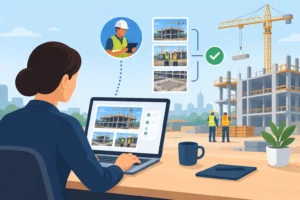
When you live near the build site, you can visit often, meet crews, and see issues as they develop. Most second-home owners cannot do that every week. They need a contractor that communicates proactively, documents progress, raises decisions early, and treats the project as if the owner were standing on site.
That is why Custom Homes Mexico has built its service around a substantial in-house team and hands-on project delivery. The objective is simple: one accountable partner from planning and design through construction, specialized systems, inspections, and final handover. Trust, communication, and value are not separate services. They are the operating standard required to manage a cross-border build with confidence.
As you compare builders, focus on the team that will actually carry your project from drawings to delivery. The right partner will give you more than a beautiful rendering and a competitive estimate. They will give you a clear point of responsibility, honest communication when conditions change, and the peace of mind to enjoy the reason you chose Los Cabos in the first place.