
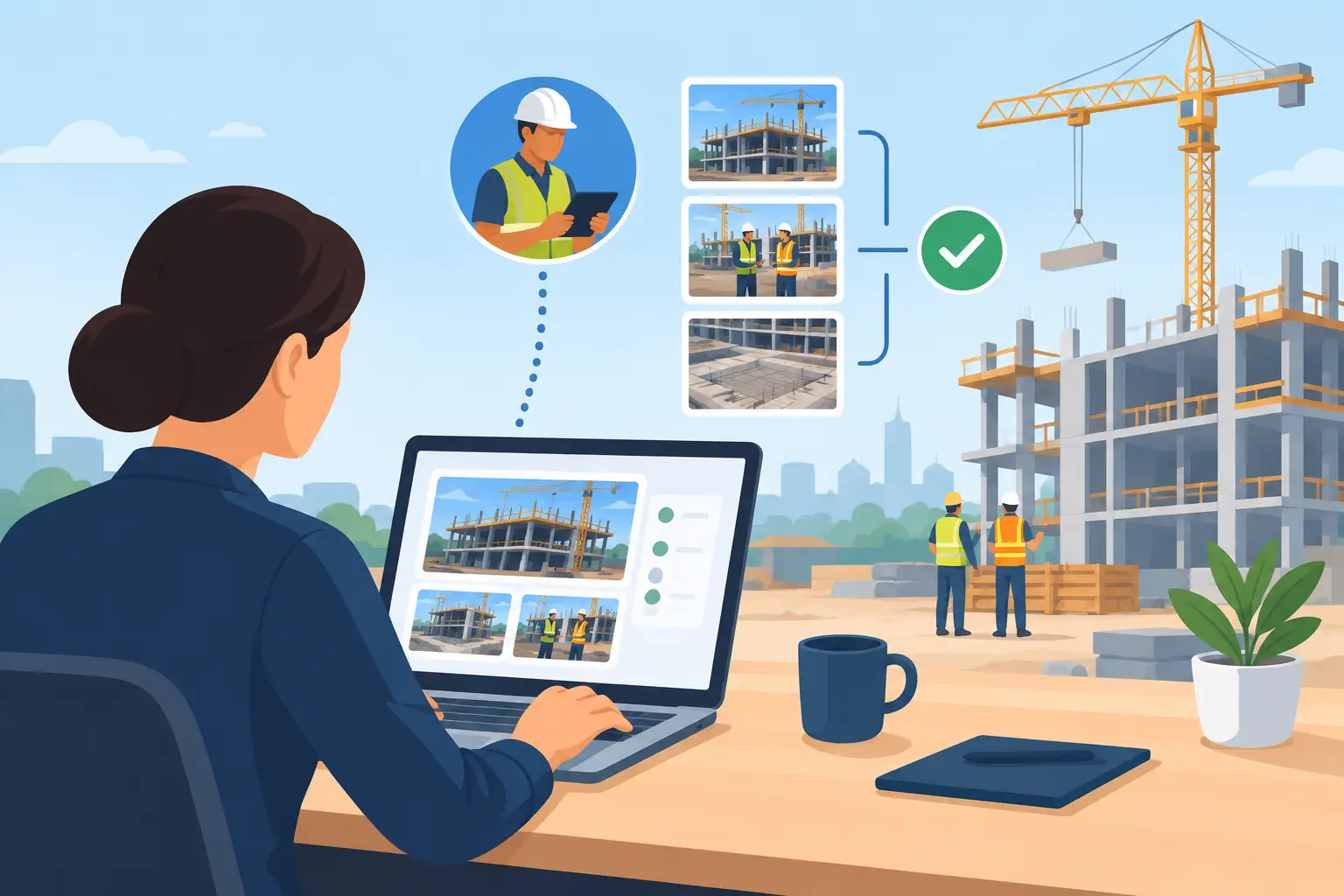
A custom home can move from excavation to finished millwork while you are thousands of miles away. That distance does not have to mean uncertainty. The key to manage absentee construction updates is not asking for more photos after a concern appears. It is establishing a reporting, approval, and verification process before work begins.
For owners in Los Cabos, the right process protects more than the construction schedule. It protects a significant investment, a future lifestyle, and the confidence that the home being built matches the plans, specifications, and quality standards you approved.
Why absentee construction needs a defined system
A weekly update is useful, but it is not the same as project control. Construction has many moving parts: architectural details, engineering coordination, concrete pours, electrical rough-in, plumbing, waterproofing, imported finishes, pool equipment, solar systems, and site access. A short message that says work is progressing does not tell an owner whether those systems are being installed correctly or whether a decision is needed before the next phase starts.
This is especially relevant in a luxury home. An adjustment to a window opening can affect a steel detail, exterior stone, motorized shade pocket, cabinetry layout, and ocean-view sightline. A delayed tile shipment may affect more than tile. It may change the sequence for bathrooms, millwork, lighting trim, and final cleaning.
The goal is not to involve an absentee owner in every field decision. A good general contractor should manage daily coordination. The goal is to make material decisions visible early, document progress clearly, and give the owner reliable information before time, budget, or quality are affected.
Manage absentee construction updates with a reporting cadence
Start by agreeing on how communication will work, who has authority to approve changes, and what information each report must include. For most custom home projects, a scheduled weekly report combined with milestone meetings creates the right balance. Daily reports can create noise when there is little meaningful change, while monthly reporting can leave too much time for an issue to grow.
A useful weekly construction update should cover the work completed, work planned for the coming week, current schedule position, decisions required from the owner, and any budget items that need attention. It should also include dated site photos and short videos taken with a purpose, not simply a collection of images from the jobsite.
The most valuable photos show progress in context. Wide shots document the overall site and exterior elevations. Detail photos confirm work that will soon be hidden, such as reinforcement, electrical pathways, plumbing pressure tests, waterproofing transitions, and insulation. A contractor should explain what the owner is seeing and why it matters.
For major milestones, video calls from the property can be worthwhile. Reviewing the layout after framing, walking exterior spaces before hardscape installation, or confirming lighting locations before drywall can prevent expensive corrections. Video is not a replacement for field supervision, but it allows an owner to participate in decisions that benefit from seeing the actual space.
Make approvals clear before work advances
Remote owners often lose control when approvals are handled casually through scattered texts, phone calls, or verbal conversations. A clear approval log solves this problem. Each item should identify the decision, the available options, the cost and schedule impact, the date a response is needed, and the final approved direction.
This matters most when a request changes the original scope. Perhaps you decide to enlarge a terrace, select a different stone, add an outdoor kitchen feature, or upgrade glazing for heat control. These can all be excellent choices. They should be documented before installation begins so there is no confusion about pricing, lead time, or responsibility later.
It also helps to define approval thresholds at the start of the project. Your builder may be authorized to handle minor field adjustments that do not affect the design, price, or completion date. Larger changes should come to the owner with enough information to make a confident decision. The exact threshold depends on the project and the owner, but the principle remains the same: no surprises.
Verify quality, not just visible progress
A beautiful slab pour or finished stucco coat can look impressive in a photo. The quality that protects a home for decades is often less visible. It is found in the preparation behind the finish: correct reinforcement, proper drainage slopes, tested plumbing, waterproofed foundations, protected electrical systems, and coordinated mechanical runs.
Ask your contractor how quality checks are built into the construction process. There should be inspection points before concrete is placed, before walls are closed, before waterproofing is covered, and before finish materials are accepted. For homes in the Cabo climate, attention to drainage, corrosion resistance, roof and terrace waterproofing, solar exposure, and salt-air conditions is particularly important.
A builder with an established in-house workforce has a practical advantage here. Architects, calculation engineers, electricians, plumbers, carpenters, pool technicians, and specialty trades can coordinate directly instead of relying on a chain of separate subcontractors. That does not eliminate the need for oversight. It makes accountability faster and clearer when a detail needs attention.
Connect schedule updates to real decisions
A construction schedule should be more than a target completion date. It should show the sequence of work, critical material lead times, inspection points, and owner selections that must be finalized to avoid delay. If imported fixtures, custom doors, appliances, or specialty lighting are part of the project, those decisions need to happen well before installation.
An honest schedule update also distinguishes between a manageable shift and a serious issue. Weather, supplier availability, community access rules, and design changes can affect timing. What matters is how quickly the contractor identifies the impact, presents recovery options, and coordinates the work that can continue.
For example, a delayed finish selection does not always stop the entire project. The team may be able to advance exterior work, pool construction, mechanical systems, or cabinetry preparation. In other cases, a late choice can affect several trades. Your builder should explain the difference plainly rather than promising a schedule result that the jobsite cannot support.
Keep budget visibility as current as the jobsite
Progress payments should connect to verified work, not assumptions. Before each draw, absentee owners should receive a clear view of the work completed, the payment requested, the contract balance, approved changes, and any pending selections that may affect the final investment.
A transparent budget process is especially valuable when upgrades are being considered. An owner should be able to compare the original allowance or specification with the proposed selection and understand whether the difference includes material, labor, delivery, installation, and related adjustments. A premium finish may require different substrate preparation, additional protection, or specialized installation. Those details belong in the conversation early.
Do not confuse the lowest initial estimate with the best value. A complete, carefully managed scope can reduce the costly corrections, unclear change orders, and delayed decisions that frequently push a project off budget. Trust, communication, and value work together when the financial reporting is direct and current.
Choose one accountable point of contact
The person sending updates should have real access to the field team, schedule, budget, and design information. A sales contact who must chase answers from several unrelated subcontractors cannot provide the responsiveness an absentee owner needs.
At Custom Homes Mexico, clients work with a local, hands-on team that can coordinate the full project from planning and engineering through construction, pools, solar, inspections, and final delivery. That one-stop-shop approach gives owners a clear place to ask questions and a team that can act on the answers.
Before selecting a builder, ask who will visit the site, who will prepare reports, who has authority to resolve trade conflicts, and how U.S. and Canadian construction standards are applied in the field. Request examples of how the company handles changes, inspections, and client approvals. The answers will tell you far more than a polished rendering.
Plan site visits around milestones
You do not need to be in Los Cabos every week to be an informed owner. If you plan to visit, schedule the trip around meaningful decision points. The framing stage is valuable for understanding room scale and view corridors. The rough-in stage allows a final check on outlets, lighting, plumbing locations, and technology. Near completion, a detailed walkthrough can address punch-list items before handover.
Some owners prefer one or two visits, while others want to be present for several major milestones. It depends on your availability, the complexity of the design, and how many selections remain open. A capable contractor can support either approach without making your presence a requirement for daily progress.
Distance should never force you to choose between being overinvolved and being uninformed. Put the right communication structure in place, select a builder with field control, and require clear answers while there is still time to make the right decision.