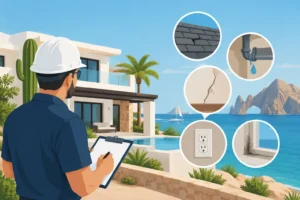

A home site in Los Cabos can look calm from thousands of miles away while dozens of decisions are moving forward on the ground. Concrete pours, plumbing rough-ins, window measurements, finish approvals, and delivery dates do not pause because an owner is in California, Texas, British Columbia, or Ontario. A clear guide to remote project reporting gives you a practical way to stay involved without trying to manage a jobsite from your phone.
For foreign owners, reporting is not simply a weekly email with a few construction photos. It is the working system that connects your investment, your builder, and the decisions that protect quality, schedule, and budget. When it is done well, you know what has been completed, what is next, what requires your approval, and whether the work matches the agreed scope.
Why Remote Reporting Matters for Los Cabos Construction
Building a custom home in Cabo involves more than selecting finishes and reviewing architectural plans. Coastal conditions, local permitting, material lead times, community requirements, engineering coordination, and specialized systems all affect the sequence of work. The right contractor should make those moving parts visible to you in a format that is easy to understand.
This is especially valuable in communities such as Palmilla, Puerto Los Cabos, Querencia, Chileno Bay, Pedregal, Diamante, Campestre, and the East Cape, where custom homes often include complex outdoor living areas, pools, extensive glazing, solar systems, and high-end mechanical equipment. A photo of a beautiful ocean view is welcome. It is not a project report.
Reliable reporting creates accountability. It gives owners a record of progress, documents decisions, and makes it easier to catch questions early, when a solution is usually less expensive and less disruptive. It also reduces the uncertainty that can come with managing a cross-border construction investment.
What a Useful Project Report Should Show
A useful report should tell a complete, honest story of the project. It should not bury you in technical paperwork, but it also should not hide behind vague language such as “everything is going well.” Your contractor should translate jobsite activity into clear information you can use.
Progress Against the Construction Schedule
Each report should identify the current construction phase, completed work, work underway, and the next planned milestones. For example, a report may confirm that structural concrete is complete, masonry is progressing by level, and the team is preparing for electrical and plumbing rough-in.
The schedule section should also address changes. A delay is not automatically a sign of poor management. Weather, a client-requested design revision, an imported fixture, or a community access restriction can affect timing. What matters is whether the contractor identifies the issue quickly, explains its impact, and provides a realistic recovery plan where possible.
Budget Status and Approved Changes
Remote owners need a straightforward view of where money is being spent. Reports should connect completed work to the agreed budget and identify any approved change orders separately from the original scope.
There is an important distinction between a budget change and a normal payment milestone. A planned progress payment for completed structural work should be supported by visible progress. A change order should explain what changed, why it changed, its cost, and any schedule effect before the work moves forward whenever practical.
Luxury construction can involve owner preferences that evolve during the build. You may decide to expand a terrace, upgrade stone, add solar capacity, redesign a pool, or select a different window system. Those choices can add value, but they should never become surprises. Clear reporting keeps decisions documented and protects the relationship between owner and builder.
Photos That Prove More Than Appearance
Quality jobsite photos are among the most valuable tools for an absentee owner, particularly when they are organized by area and construction stage. Wide images establish overall progress. Close-up images show details such as reinforcement, waterproofing, electrical routing, plumbing connections, tile layout, or millwork installation.
The best reports include captions that explain what you are seeing and why it matters. Instead of sending an unlabeled photo of a roof deck, the report should identify the area, the completed waterproofing stage, the upcoming finish layer, and any inspection or quality-control checkpoint.
Photos should be current and consistent. A regular visual record helps you follow progress over time and provides useful documentation for future maintenance, warranty questions, renovation planning, and resale due diligence.
Quality Control, Inspections, and Technical Coordination
A custom home is not judged only by the finishes visible at final delivery. Much of its long-term performance depends on work that will later be covered by concrete, drywall, tile, stucco, or landscaping. That includes structural details, drainage, waterproofing, electrical capacity, plumbing installation, mechanical systems, and pool equipment.
Your report should identify key quality-control reviews and coordination points. For international owners, it is reassuring to know not just that work is moving, but that the appropriate team reviewed it before the next trade began. An in-house team can be a major advantage here because architects, engineers, electricians, plumbers, carpenters, designers, pool technicians, and solar specialists can coordinate directly rather than relying on disconnected subcontractors.
At Custom Homes Mexico, this hands-on structure supports a familiar North American approach to accountability: clear responsibility, careful trade coordination, and work performed to applicable code requirements and U.S./Canadian standards where appropriate for the project.
Set the Reporting Rhythm Before Work Begins
The strongest reporting process is established before construction starts. Owners and builders should agree on how often updates will be issued, who receives them, which decisions require owner approval, and how urgent questions are handled.
For most custom home projects, a detailed weekly report is appropriate. It keeps momentum visible without creating unnecessary administration. During high-decision periods, such as finish selection, cabinetry production, pool design, or final systems commissioning, more frequent communication may be useful.
A monthly report can work for early planning, permitting, or long-lead procurement, but it is often too slow during active construction. The right rhythm depends on the project stage. The key is consistency. If you only receive updates when there is a problem, the reporting process is failing its purpose.
It also helps to schedule regular video calls. A short call tied to the written report allows the builder to walk through decisions, answer questions, and confirm next steps. This is more productive than a stream of scattered text messages that can be missed, misunderstood, or separated from the project record.
Know What Requires Your Decision
Remote reporting should not turn every jobsite detail into an owner emergency. Your builder is there to manage the work. At the same time, certain decisions deserve clear approval because they affect cost, appearance, performance, or timing.
These commonly include material substitutions, changes to the architectural scope, major finish selections, equipment upgrades, landscape revisions, pool modifications, and any change order outside the approved budget. A good report presents the decision in plain language, includes the practical options, and explains what happens if a choice is delayed.
This is where trust and communication matter most. You should be able to ask direct questions and receive direct answers. If a less expensive alternative is proposed, ask how it affects durability, maintenance, lead time, warranty, and the finished appearance. Value is not always the lowest initial price. For a Cabo home, it may mean selecting a material or system that performs better in heat, salt air, seasonal occupancy, and coastal conditions.
Warning Signs to Watch From Afar
No reporting system eliminates every construction risk, but weak communication is often visible early. Be cautious if reports are irregular, photos lack dates or context, budget questions receive vague answers, or schedule changes are mentioned only after milestones have passed.
Another concern is a contractor who cannot clearly explain who is performing the work and who is responsible for coordination. Construction involves many trades, but the owner should have one accountable point of contact. A one stop shop model can reduce handoffs and confusion when it is backed by a capable local workforce, documented processes, and responsive leadership.
Also watch for reports that focus only on polished finishes. A project needs reporting during excavation, structure, waterproofing, rough-in, and inspections, not just when it is ready for a social-media photo. The hidden work deserves the closest attention.
Make Reporting Part of the Builder Relationship
The best remote project reporting feels less like a formal obligation and more like an extension of a well-managed builder relationship. You should know who is leading your project, how to reach the team, and how decisions are being tracked. Your contractor should understand that your home is both a personal place and a significant investment.
When you choose a builder for a Los Cabos custom home, ask to see the kind of progress reporting they provide. Ask how they document quality checkpoints, manage approvals, communicate budget changes, and keep the schedule visible. The answers will tell you a great deal about how the project will be managed when you are not on site.
A well-built home begins with capable people on the ground. A well-managed remote build gives you the confidence to see that capability at work, week by week, from wherever you call home.