
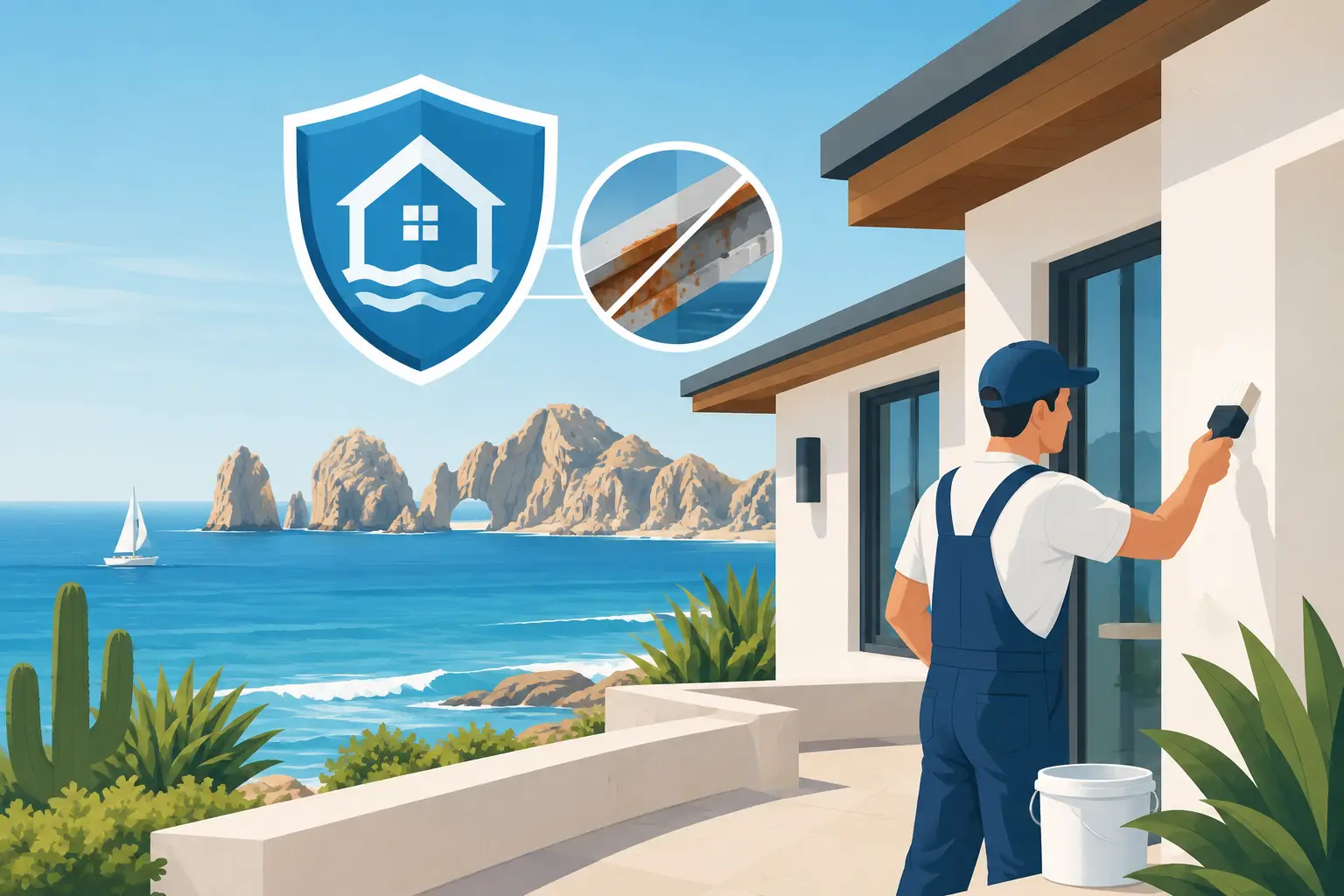
A Los Cabos home can look flawless at handover and still face a hard environmental reality: ocean air reaches far beyond the beachfront. To prevent salt air corrosion, the right decisions need to happen before construction begins, from the metal specified for a gate to the fasteners hidden behind exterior cladding. This is not a cosmetic concern. Salt exposure can shorten the service life of railings, windows, HVAC equipment, pool systems, solar hardware, and structural connections when products and installation details are not designed for the coast.
For U.S. and Canadian owners, the issue is often underestimated because a home may be several minutes from the water or sit within a gated community. In Cabo San Lucas, San José del Cabo, Palmilla, Puerto Los Cabos, Chileno Bay, and along the East Cape, wind, humidity, and airborne salt can still create an aggressive environment. A better plan protects the investment, reduces disruptive repairs, and keeps a luxury property looking as intended.
Why Salt Air Causes Expensive Damage
Salt itself does not have to land in visible crystals to cause trouble. Fine airborne chlorides settle on exterior surfaces, collect in joints and crevices, and hold moisture against metal. That moisture supports the electrochemical process that turns unprotected steel orange, pits aluminum, stains stone from rusting anchors, and degrades electrical connections.
The damage accelerates where water sits. Horizontal rail caps, bottom tracks on sliding doors, shaded exterior brackets, roof penetrations, and pool-equipment enclosures are common weak points. Heat and intense sun add another layer of stress by breaking down lower-grade coatings and sealants. When a finish cracks or an incompatible fastener contacts another metal, corrosion can begin behind a surface that still looks acceptable from a distance.
The cost is rarely limited to replacing one rusty screw. Corroded fasteners can loosen a pergola connection. A failed door track can affect security and operation. A neglected condenser can lose efficiency or fail early. In a high-value home, correcting hidden corrosion after occupancy may require access work, finish repairs, and disruption to outdoor living areas.
Build a Coastal Material Schedule, Not a Generic One
The most reliable way to prevent salt air corrosion is to make coastal durability part of the design and purchasing process. Material decisions should be coordinated between the architect, engineer, builder, specialty trades, and owner before orders are placed. Substitutions made later to save upfront cost are often where problems begin.
Choose the right metal for the application
Stainless steel is not one category. For exposed coastal hardware, railings, screws, anchors, and marine-adjacent components, 316 stainless steel generally offers better chloride resistance than commonly used 304 stainless. It is not invincible, but it is a more appropriate starting point in salt-air conditions when properly fabricated, cleaned, and maintained.
Hot-dip galvanized steel can perform well for structural and concealed elements, especially when it receives an appropriate topcoat system. Aluminum is often an excellent choice for window and door frames because it does not rust, but it still needs a durable coastal-grade finish and careful separation from incompatible metals. Copper, bronze, and selected powder-coated aluminum can also suit particular design goals, though each requires a compatible fastening and drainage strategy.
There is no single best material for every part of a Los Cabos home. A black steel entry gate, for example, may fit the design perfectly, but it needs more than a standard paint application. The fabrication quality, weld treatment, galvanizing or coating system, drainage, and maintenance access all matter. The right answer depends on exposure, desired appearance, budget, and how easily the item can be serviced later.
Specify finishes that match the exposure
A premium finish is a system, not a label. Powder coating can be a strong option for aluminum and steel when the surface preparation, pretreatment, coating thickness, curing process, and product rating are appropriate for coastal use. For steel in highly exposed locations, a duplex system – galvanizing followed by a compatible protective coating – can provide meaningful additional protection.
Painted metal needs careful edge coverage, particularly at cut ends, welds, bolts, and fabricated corners. These are often the first places a coating fails. For exterior metalwork, the specification should identify surface preparation standards, primer type, finish coats, color expectations, and touch-up requirements. A vague instruction to paint black leaves too much room for inconsistent results.
Windows, doors, and louvers deserve the same attention. Their finishes must resist ultraviolet exposure as well as salt, while tracks, drainage paths, fasteners, and internal hardware need to be designed for the environment. A beautiful frame is not enough if its drainage holes are blocked or its concealed hardware is low grade.
Details That Keep Salt and Water From Sitting
Coastal construction is often won or lost in the details owners do not see. A quality installation gives water a way out, keeps dissimilar materials from reacting with one another, and allows future inspections without dismantling finished work.
Drainage should be intentional at planters, parapets, exterior stairs, roof transitions, door thresholds, rail bases, and equipment pads. Standing water concentrates contaminants and creates a prolonged wet condition around metal. Sloped caps, drip edges, weep paths, and clear drain openings are simple details, but they have a direct effect on durability.
Dissimilar-metal contact also requires attention. When aluminum, carbon steel, copper, stainless steel, and galvanized steel are joined without separation, moisture can encourage galvanic corrosion. Nonconductive isolators, compatible sealants, gaskets, washers, and correctly selected fasteners help interrupt that reaction. This is especially relevant around railings, rooftop equipment, solar mounting, decorative screens, and pool-area hardware.
Mechanical and electrical equipment should be located with serviceability in mind. Placing a condenser in a tight, unventilated space may hide it from view, but it can expose the unit to salt-laden air while making routine cleaning difficult. Equipment clearances, protective coatings, elevated pads, and accessible service routes should be considered early rather than after landscaping and hardscape are complete.
Protect the Systems Owners Rely On Every Day
Some of the most expensive corrosion failures occur in systems that are expected to work quietly in the background. HVAC units, pool equipment, solar components, exterior lighting, and electrical panels all need coastal-minded selection and installation.
For HVAC, coastal-rated coils or protective coil coatings may be justified depending on distance from the water and wind exposure. Regular rinsing and professional servicing are equally important. The trade-off is that coatings and higher-grade equipment can increase initial cost, while replacement of a prematurely failed condenser can be far more expensive and inconvenient.
Pool environments add chlorinated or saltwater splashing to the coastal air already present. Pumps, heaters, handrails, ladders, light niches, bonding connections, and nearby metal furniture all require compatible materials and a disciplined maintenance routine. Pool chemistry should remain balanced, since aggressive water can damage equipment from the inside while sea air attacks it from the outside.
Solar systems need corrosion-resistant racking, appropriate fasteners, sealed roof penetrations, and properly protected electrical connections. The array should not compromise roof drainage or create inaccessible areas where debris and moisture collect. A solar installation is a long-term asset, so its mounting details should be treated as seriously as the panels themselves.
A Maintenance Plan Is Part of the Protection
Even a well-built coastal home needs regular attention. Owners who use their residence seasonally should arrange for consistent property checks rather than waiting until a visit reveals staining, sticking doors, or a nonfunctioning system.
At least several times a year, exterior metal, glass tracks, railings, gates, outdoor kitchens, and equipment should be rinsed with fresh water to remove salt deposits. Frequency should increase after periods of strong onshore wind or storms. Avoid harsh abrasives and chemicals that can damage protective finishes or leave residues behind.
A professional inspection should look beyond visible rust. The team should check coating damage, fastener condition, drainage openings, sealants, roof penetrations, electrical enclosures, HVAC coils, pool equipment, and areas where different materials meet. Small chips or early corrosion should be addressed promptly, before moisture reaches the substrate and spreads beneath the finish.
For owners managing a property from the United States or Canada, documentation matters. Photos, service records, warranty information, and a clear schedule make it easier to track conditions and plan work before a minor issue affects the home’s appearance or function.
Make Corrosion Control Part of the Build Team’s Scope
Preventing corrosion is not a separate add-on at the end of a project. It is a coordination responsibility that touches design, engineering, procurement, construction, and ongoing service. The builder should be able to explain why a material was selected, how it will be installed, what exposure it will face, and what maintenance the owner should expect.
Custom Homes Mexico approaches coastal construction with an in-house team and a one stop shop mindset, allowing decisions about structure, finishes, electrical work, plumbing, pools, and solar systems to be coordinated instead of passed between disconnected trades. That control supports the standards foreign owners expect: clear communication, accountable workmanship, and value over the full life of the home.
The best time to protect a Los Cabos property is while the plans are still on the table. Ask detailed questions about metals, coatings, fasteners, drainage, equipment locations, and service access, then carry those decisions through construction with the same care given to the view and the finishes.