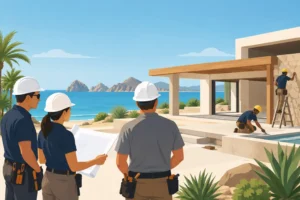
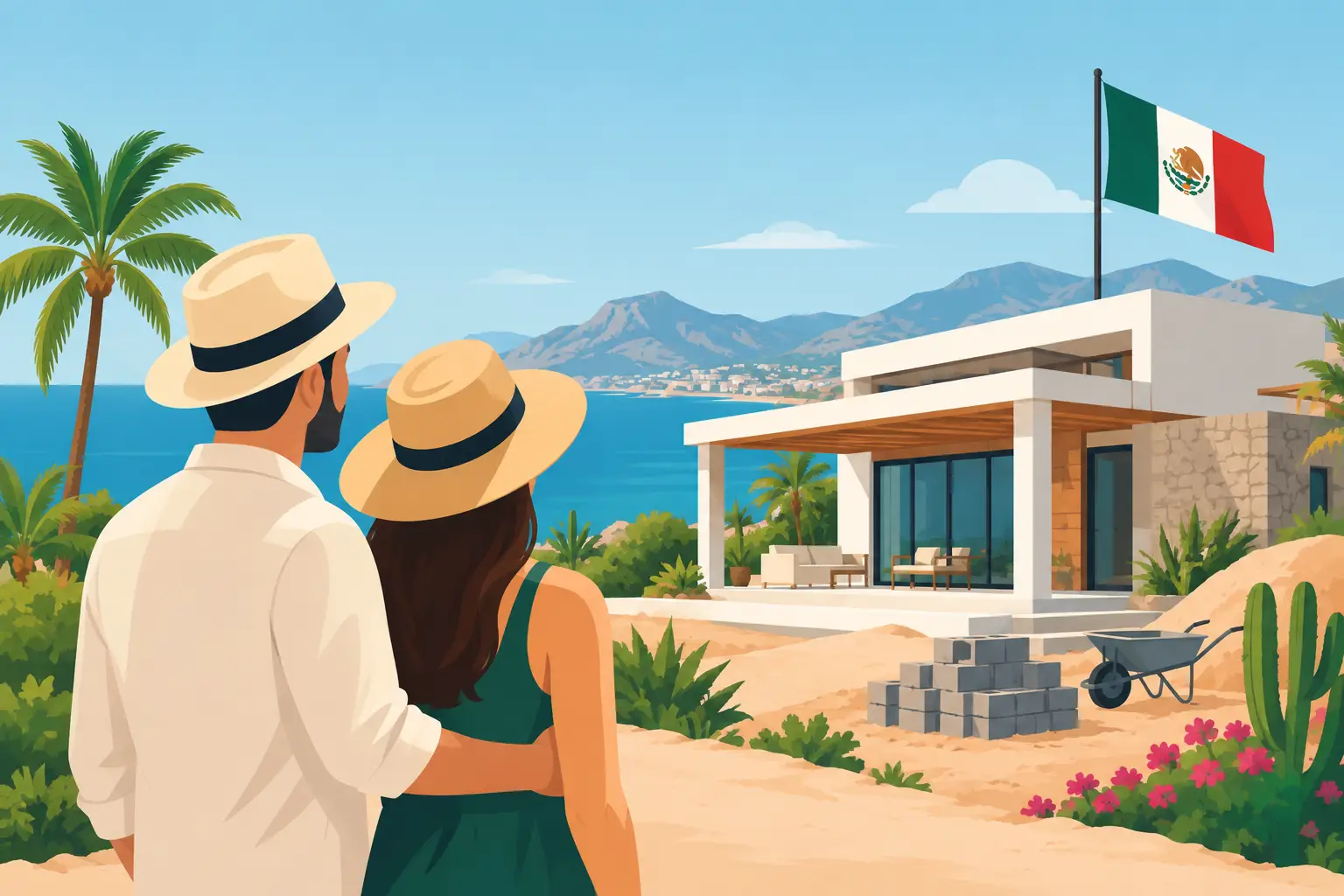
A hillside lot in Los Cabos can look ready for construction long before the legal, engineering, and permitting work is complete. So, can foreigners build a home in Mexico? Yes. U.S. and Canadian citizens build exceptional primary residences, vacation homes, and investment properties here every year. The key is to establish the right ownership structure, verify the land, and work with a builder who can manage the full process on the ground.
For buyers accustomed to North American transactions, the Mexico process can feel different at first. It should not feel uncertain. With the right legal and construction team, a custom build in Cabo can be managed with clear scopes, documented decisions, code-aware engineering, and regular communication from concept through final delivery.
Can Foreigners Build a Home in Mexico’s Coastal Areas?
Foreigners can own and build on residential property in Mexico, including the Los Cabos coastline. Because Los Cabos falls within Mexico’s restricted zone – the area within 50 kilometers of the coast – foreign buyers typically acquire residential property through a fideicomiso, or bank trust.
Under this structure, a Mexican bank holds legal title while the foreign buyer is the trust beneficiary. The beneficiary retains the practical rights that matter to an owner: the right to use, improve, lease, sell, transfer, and pass the property to heirs. A properly established fideicomiso is a standard, long-standing ownership vehicle for foreign buyers in Baja California Sur.
The trust is not a shortcut around ownership. It is the recognized legal framework for holding coastal residential real estate as a foreign national. Your notary, attorney, real estate professional, and bank should confirm the details before closing. If the parcel will be held in a corporate structure or used for commercial activity, obtain advice tailored to that intended use.
Building is then a separate but connected undertaking. Holding the property properly gives you the right foundation, but it does not confirm that the lot is buildable, that the planned home meets community rules, or that permits are in place.
Start With Land Due Diligence, Not Floor Plans
The most expensive construction problems often begin before construction. A beautiful view lot may have steep access, difficult soil conditions, utility limitations, drainage concerns, easements, or architectural restrictions that affect what can actually be built.
Before purchasing land, confirm clear title and the ownership structure with qualified local professionals. Verify the legal boundaries against a current survey, review access rights, and determine whether water, power, sewer, or septic systems are available and adequate for the planned home. In Los Cabos, topography and stormwater management deserve early attention. A dramatic ocean-view site may require retaining systems, specialized foundations, and thoughtful drainage planning.
Be especially careful with ejido land. Ejido property has a different legal history and may not be suitable for a foreign buyer without a complete, legally verified conversion process. A low purchase price does not offset an unclear path to legal title.
For homes in communities such as Palmilla, Puerto Los Cabos, Querencia, Chileno Bay, Pedregal, Diamante, Campestre, or the East Cape, review the homeowner association’s design guidelines before committing to a design direction. Many communities have requirements covering height, setbacks, rooflines, exterior finishes, landscaping, construction hours, contractor access, and approval timing. These rules protect the community, but they also shape the budget and schedule.
Design for the Site, Climate, and Approval Process
A custom home in Cabo should respond to more than a view. It should be designed around sun exposure, prevailing winds, salt air, seasonal rain, privacy, access, and the way you plan to live in the home.
That may mean covered outdoor living areas, shaded glazing, durable coastal materials, efficient cooling, solar planning, water storage, and pool systems selected for the environment. It also means balancing architectural ambition with practical maintenance. A striking detail that is difficult to service from abroad may not deliver the long-term value a second-home owner expects.
Engineering coordination belongs at the beginning of design, not after architectural drawings are complete. Structural calculations, mechanical systems, electrical loads, plumbing routes, pool engineering, and site drainage all affect the home itself. Early coordination reduces field changes and helps establish a more reliable budget.
For foreign owners, a design-build team offers a meaningful advantage. Instead of asking an architect, engineer, permit consultant, and contractor to interpret one another’s work after the fact, one accountable team can coordinate decisions before they become costly corrections. That is particularly valuable when you are managing a project from the United States or Canada.
Permits and Construction Are Local Responsibilities
A home cannot simply be started after a land purchase. The required approvals vary by municipality, site conditions, development, and project scope, but they commonly involve municipal construction permits, approved plans, engineering documents, and community approvals where applicable.
The exact sequence matters. Starting work without proper authorization can create delays, fines, or difficulties when selling the property later. A qualified general contractor should help establish the permitting path, organize the technical documents, and coordinate the work so the approved design matches what is built.
Construction quality also depends on who is doing the work every day. Some projects are managed as a loose collection of subcontractors, with the owner left to resolve gaps between trades. That approach can be risky on a luxury home with complex concrete work, custom millwork, imported finishes, pool equipment, solar systems, and smart-home infrastructure.
Look for a contractor with a real operating team, defined site supervision, and clear responsibility for each phase. At Custom Homes Mexico, the in-house workforce includes architects, calculation engineers, electricians, plumbers, carpenters, designers, pool technicians, solar engineers, and specialty trades. That level of control helps keep decisions connected from plans to installation, while applying the U.S. and Canadian construction standards many foreign owners expect.
Budget for the Whole Project, Not Just the House
The construction contract is a major part of the investment, but it is not the only cost. A realistic project budget should consider professional design and engineering, permits, bank trust costs, site preparation, utility connections, community deposits, pools, landscaping, furnishing, and contingency for conditions uncovered during construction.
Material selection is another area where clarity matters. Cabo offers access to excellent materials and craftsmanship, but availability, lead times, freight, and import requirements can influence both pricing and scheduling. If a design depends on a specific appliance line, stone, window system, or specialty fixture, confirm procurement strategy early rather than assuming it will arrive on the same timeline as it might in California, Arizona, or British Columbia.
A detailed scope protects everyone. It should define what is included, identify allowances clearly, establish payment milestones, address change orders, and document the expected construction timeline. Fixed prices can be useful when the design and specifications are truly complete. When selections remain open or site conditions are uncertain, an allowance or transparent cost-plus structure may be more honest. The right choice depends on the project, but ambiguity is never good value.
Manage From Abroad Without Losing Control
You do not need to be onsite every week to remain involved, but you do need a dependable communication system. Foreign owners should expect regular progress reports, current photos and video, budget updates, schedule visibility, and a clear process for approvals and changes.
Ask who will be your day-to-day point of contact. Ask how site quality is checked, who coordinates each trade, and how a problem is documented and resolved. You should also understand how final inspections, punch-list work, equipment training, warranties, and ongoing maintenance will be handled after handover.
The strongest builder relationship is not based on promises alone. It is based on Trust – Communication – Value, supported by a team that is present locally and accountable for the finished home. Before you sign for land or approve a first concept, make sure the people guiding the project can explain the legal, technical, and practical steps in plain language. That early conversation can protect years of enjoyment in your Mexico home.