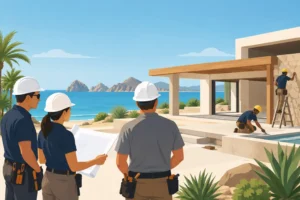
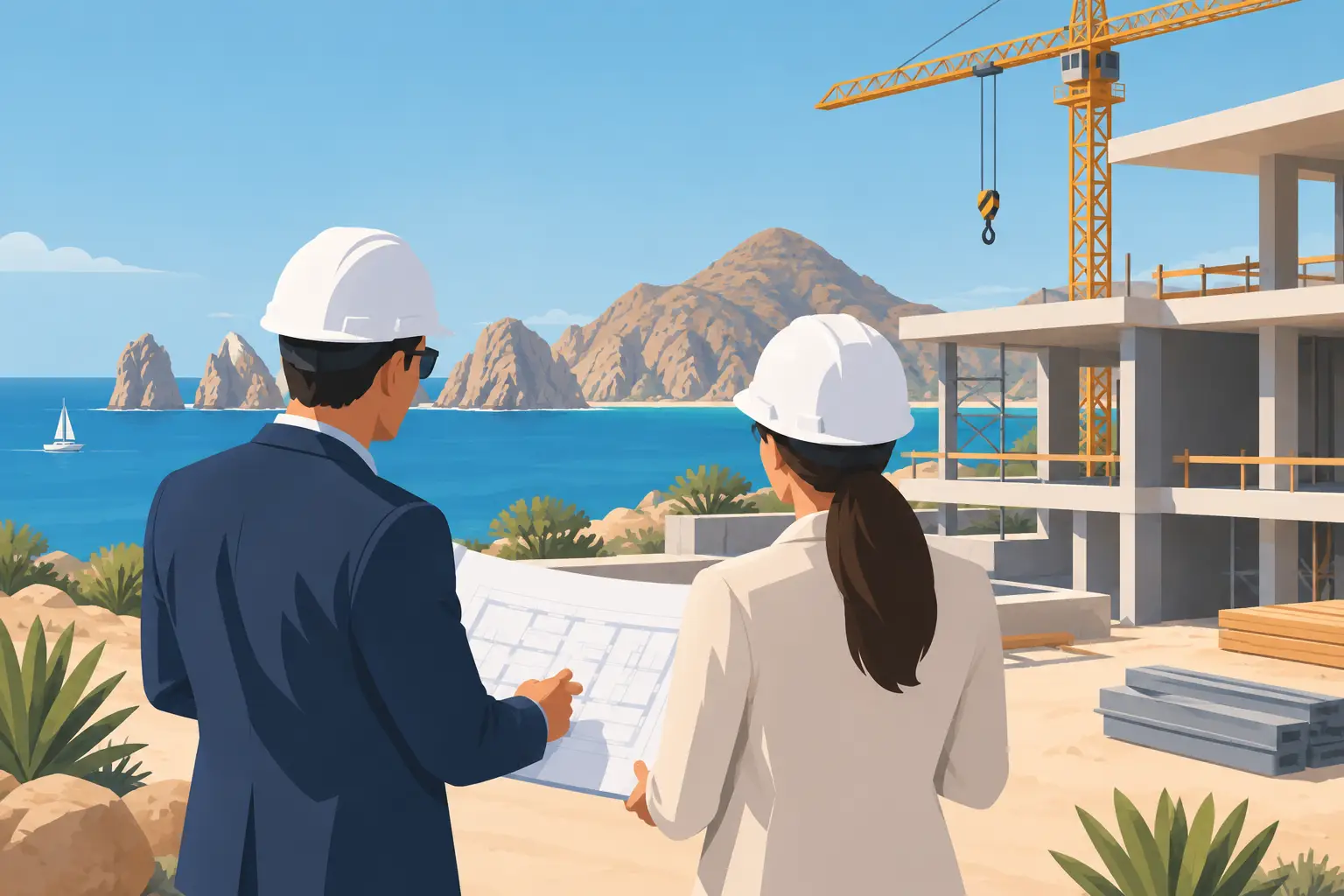
A commercial property in Los Cabos has to work harder than a residential home. It may need to welcome guests, support staff, protect valuable equipment, manage heavy air-conditioning loads, and maintain an exceptional appearance through heat, salt air, and seasonal storms. Choosing the right commercial construction contractor in Los Cabos is therefore about far more than obtaining a competitive price. It is about finding one accountable team that can turn a business plan into a durable, code-conscious property without leaving you to coordinate trades from another country.
For U.S. and Canadian owners, investors, and operators, the best construction relationship starts with clear answers. Who is supervising the work every day? Who is responsible for engineering coordination? How will changes be approved? What standards will guide electrical, plumbing, structural, and safety decisions? Those questions reveal much more than a polished proposal ever can.
Commercial Construction Has Different Demands
A luxury residence and a commercial project share many construction fundamentals, but commercial work introduces another layer of responsibility. A restaurant, retail space, office, medical suite, fitness facility, clubhouse, rental operation, or mixed-use development must serve customers and employees reliably while protecting the owner’s investment.
That means the contractor must think beyond finishes. Access, traffic flow, service areas, storage, drainage, lighting, mechanical capacity, fire protection requirements, signage allowances, accessibility considerations, and maintenance all affect the finished result. A beautiful lobby is not a success if the back-of-house layout slows operations. An oceanfront terrace is not an asset if its materials and drainage details cannot withstand coastal exposure.
Los Cabos also presents conditions that should shape decisions early. Intense sun, humidity, wind, salt, water availability, local utility conditions, and site access can influence structural systems, glazing, waterproofing, pool equipment, HVAC design, solar planning, and construction logistics. The right solution depends on the property, its use, and its location. A retail project in San José del Cabo will not have the same needs as a hospitality-focused project in Cabo San Lucas or an amenity building on the East Cape.
What to Look for in a Commercial Construction Contractor in Los Cabos
The most reassuring contractor is not simply the one with the largest portfolio. It is the one with a visible operating structure and a process that makes responsibility clear from planning through final delivery.
A Team That Controls the Work
Commercial schedules can lose momentum quickly when every critical task depends on outside subcontractors with competing commitments. Ask how much of the work is performed and managed by the contractor’s own team. An in-house workforce of architects, calculation engineers, electricians, plumbers, carpenters, designers, pool technicians, solar engineers, and specialty trades creates greater control over sequencing and quality.
This does not mean every project will avoid specialized outside vendors. Some equipment, finishes, and approvals require specific partners. What matters is that one experienced contractor remains responsible for coordination, workmanship, schedule, and communication. You should not be left trying to determine whether a delay belongs to the electrician, the plumber, the engineer, or the supplier.
Familiar Standards and Local Knowledge
Foreign owners often worry that building in Mexico means accepting an unfamiliar level of oversight. It should not. Look for a team that understands U.S. and Canadian construction expectations while working effectively within local codes, permitting processes, labor conditions, and supply chains.
Code compliance matters, but so do the details that protect long-term value: correct wire sizing, properly planned electrical panels, well-designed plumbing runs, drainage slopes, waterproofing transitions, concrete quality, and equipment access. Red Seal-certified trade professionals and engineers who coordinate calculations provide meaningful confidence when systems must perform under commercial use.
A contractor should also be candid about what is possible. Imported materials may enhance a specific design goal, but they can affect cost, lead time, replacement availability, and customs coordination. Local materials can offer strong value and faster support, but they must be selected carefully for the desired finish and performance. Good advice is not about pushing one answer. It is about explaining the trade-offs before the decision becomes expensive.
Communication That Is Built Into the Process
Distance should not create uncertainty. Many commercial owners are based in the United States or Canada and cannot visit the site every week. They need a contractor who treats communication as part of the work, not as an afterthought.
Before construction begins, establish how often you will receive updates, what documentation will be shared, who can approve changes, and how budget adjustments will be presented. The process should make it easy to understand completed work, upcoming decisions, current procurement items, and any issue that could affect the schedule or cost.
Clear communication is especially important when the scope evolves. Commercial projects often reveal opportunities or constraints once demolition begins or systems are opened up. A reliable builder documents the condition, explains the options, prices the impact, and receives approval before moving forward. That is how trust, communication, and value remain practical commitments rather than marketing language.
Start With Planning, Not a Bid Spreadsheet
A low initial bid can be attractive, but it is not always a low project cost. If the drawings are incomplete, engineering is not coordinated, allowances are vague, or site conditions have not been evaluated, a number may only represent the beginning of the conversation.
A better approach starts with a complete understanding of the commercial objective. Is the property intended for owner occupancy, lease income, hospitality, retail, or a combination of uses? What level of durability is required? Which systems are essential to operations? Is there a target opening date tied to a season, tenant commitment, or sales plan?
Design-build delivery can be particularly valuable when these decisions need to move together. Instead of separating design intent from construction reality, the architect, engineers, and construction team coordinate early. This can help identify structural needs, mechanical loads, solar opportunities, pool or water-feature requirements, and material selections before they become field changes.
For a renovation or tenant improvement, planning should include a detailed inspection of existing conditions. Older buildings can hide undersized electrical service, water intrusion, outdated plumbing, insufficient drainage, or structural modifications that need review. An honest assessment before work begins helps protect both the budget and the opening schedule.
Budget and Schedule Need Realistic Ownership
Owners deserve direct information about cost and timing. They also deserve to understand what those figures are based on. A professional proposal should define the scope, specifications, allowances, exclusions, and payment structure in language that can be reviewed without guesswork.
Commercial schedules are affected by more than labor. Permit timing, long-lead equipment, imported products, weather, utility coordination, inspection requirements, and owner selections all matter. A contractor who promises an aggressive completion date without discussing these dependencies may be creating risk rather than confidence.
The goal is not perfection on paper. The goal is a workable construction plan with checkpoints. Early procurement of long-lead items, timely material selections, coordinated drawings, and regular site supervision all support a project that stays on time and on budget. If an issue arises, the contractor should bring forward a solution with clear implications, not a surprise after the fact.
Build for Operations and Long-Term Value
The most successful commercial spaces are designed around daily use. Finishes should be selected not only for appearance, but also for cleaning, replacement, slip resistance, UV exposure, and expected traffic. Mechanical and pool equipment should be accessible for service. Electrical capacity should allow for future growth where appropriate. Exterior materials should be chosen with coastal maintenance in mind.
Energy planning deserves attention as well. Efficient air-conditioning equipment, insulation, glazing, shading, LED lighting, and solar installation can reduce operating costs over time. The best package depends on the building’s use, electrical demand, roof configuration, and utility conditions. A thoughtful contractor will evaluate the system as a whole instead of treating solar as a separate add-on.
Custom Homes Mexico brings this one-stop-shop approach to commercial construction, pairing local, hands-on project delivery with the standards and communication many North American owners expect. From early planning and engineering coordination to specialty systems and final completion, accountability should remain with one team.
Questions Worth Asking Before You Hire
Before choosing a contractor, ask to understand the people and process behind the proposal. You should know who will manage the site, how often you will receive updates, how changes are authorized, and how quality is checked before each phase is closed. Ask about the team’s commercial experience, engineering coordination, safety practices, licensing or certification, and approach to warranty support.
It is also reasonable to ask how the contractor handles a problem. Every construction project has variables. The meaningful difference is whether the builder identifies issues early, communicates directly, and stays responsible until they are resolved.
Your Los Cabos commercial property may become a workplace, a destination, an income-producing asset, or a defining part of a larger development. Give it a construction partner who understands that the finished building must do more than look complete. It must perform well, represent your business, and give you confidence long after the final walkthrough.