For buyers searching “red seal electrician mexico,” the real question is not simply who can pull wire. It is who can plan, install, test, and stand behind an electrical system worthy of a high-value Los Cabos home. Your electrical work supports everything from air conditioning and pool equipment to smart-home controls, solar production, outdoor entertaining, and the daily reliability your family expects.
At Custom Homes Mexico, we treat electrical planning as a core part of the build, not a late-stage trade package. A Red Seal-trained professional brings a North American standard of workmanship and problem-solving to the job. Combined with local code compliance, proper permitting, and an experienced on-the-ground team, that standard helps protect both your home and your investment.
What a Red Seal Electrician Brings to a Mexico Project
The Red Seal is a respected Canadian trade certification that recognizes skilled professionals who have met a national standard in their trade. For an electrician, that means formal training, documented experience, technical examinations, and the ability to work through complex electrical requirements rather than relying on guesswork or shortcuts.
For a custom home in Cabo, this background matters because the electrical system is rarely simple. Luxury homes often include multiple service panels, whole-home surge protection, backup power planning, high-capacity air conditioning, pool and spa systems, exterior landscape lighting, motorized shades, security equipment, AV systems, and solar integration. Each system affects the others.
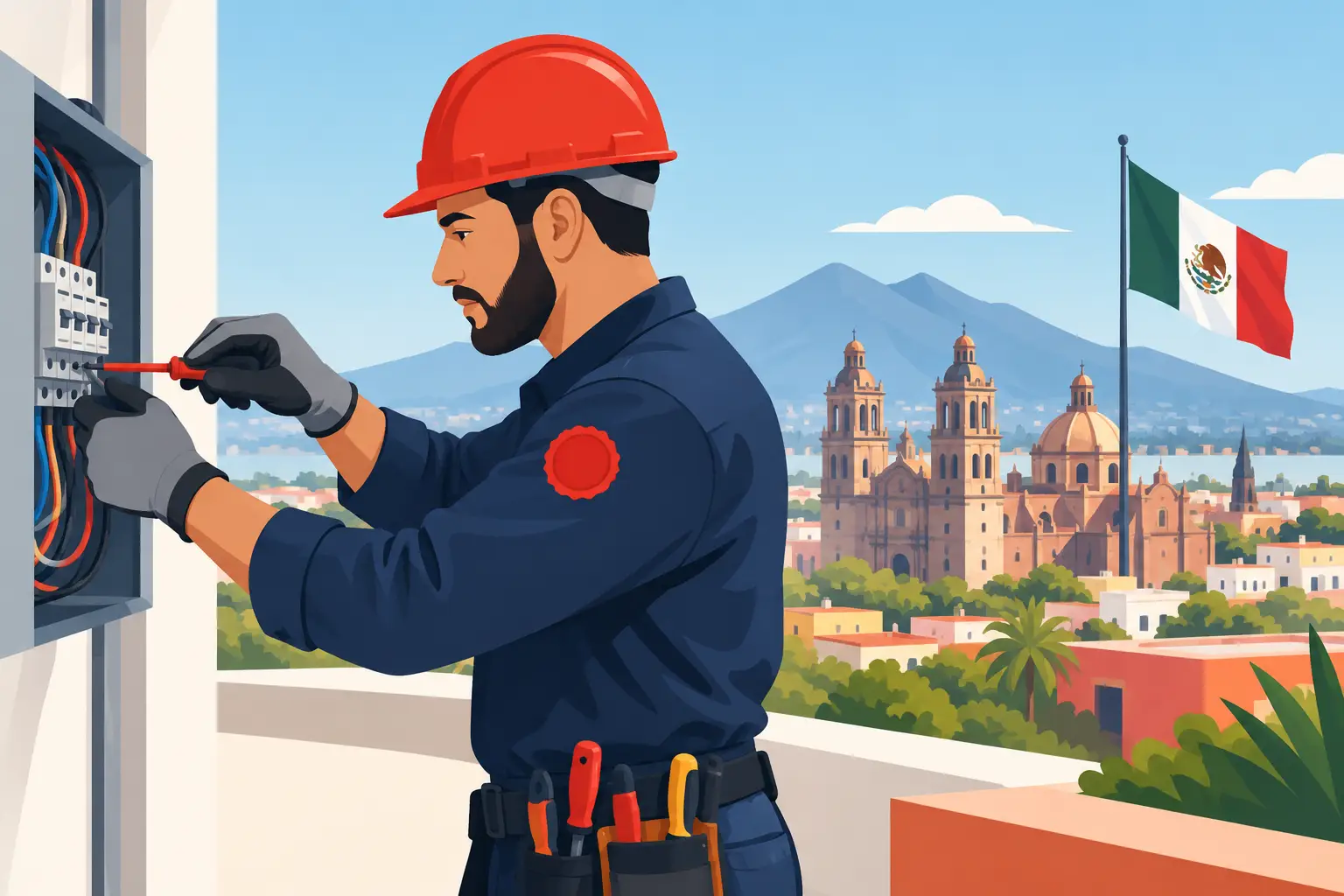
A Red Seal electrician approaches that work with disciplined load calculations, circuit planning, panel organization, grounding, conductor sizing, and testing procedures. The result is a system designed for how the home will actually be used, not merely one that functions on the day it is installed.
Certification Is Not a Substitute for Local Compliance
A Red Seal credential is valuable, but it is not a replacement for Mexican regulations, local permits, utility requirements, or the licensed local professionals required for a project. Good construction in Baja California Sur requires both: proven North American trade standards and a working knowledge of local conditions and approvals.
That balance is especially important for foreign owners. You want a team that understands your expectations for safety, documentation, communication, and finish quality while also knowing how to coordinate work correctly in Los Cabos. A contractor should never present a foreign credential as a workaround for local requirements. It should be part of a larger quality-control system.
Why Electrical Planning Matters in Los Cabos
Los Cabos creates electrical design considerations that may not be obvious when you first purchase land or begin reviewing plans. Intense heat, coastal air, seasonal storms, utility fluctuations, and the demands of indoor-outdoor living all shape the decisions made behind the walls.
Air conditioning is often the largest electrical demand in a luxury residence. If the system is not properly calculated and coordinated early, homeowners can face overloaded panels, inadequate capacity for future additions, or expensive rework after finishes are complete. The same is true for pools, spas, water features, outdoor kitchens, and high-powered appliances.
Coastal conditions also deserve attention. Material selection, equipment placement, weather protection, corrosion resistance, grounding, and surge protection should be considered from the start. A beautifully finished ocean-view home can still become frustrating to own if electrical components are poorly protected or difficult to service.
For homes in Palmilla, Puerto Los Cabos, Querencia, Chileno Bay, Pedregal, Diamante, Campestre, or the East Cape, community standards may add another layer of coordination. Architectural review requirements, generator restrictions, solar placement, and equipment screening can affect the final electrical design. Addressing these details during planning is much less costly than making changes after construction is underway.
The Difference Between Wiring and System Design
Any electrician can install outlets, switches, and fixtures from a basic plan. A properly managed custom-home electrical scope begins much earlier. It asks how the owner intends to live in the home, what systems need dedicated capacity, where equipment will be located, and how future upgrades can be accommodated.
For example, a homeowner may initially want a modest solar array but plan to add battery storage later. That future need should influence panel capacity, conduit routes, disconnect locations, and the coordination between the solar team and electrical team. Planning for it during construction is straightforward. Adding it after walls, landscaping, and hardscape are complete can be disruptive and costly.
The same thinking applies to EV charging, generator readiness, outdoor entertaining areas, home offices, security cameras, and smart lighting controls. A well-designed system leaves room to evolve. It also keeps the equipment organized enough that a future technician can service it without tracing a maze of undocumented circuits.
Clear Documentation Protects Remote Owners
Many Custom Homes Mexico clients manage construction from the United States or Canada. They cannot visit the jobsite every week to ask where a panel is being installed or whether the pool equipment received its own circuit. That makes documentation and communication essential.
Before work begins, owners should understand the electrical scope, major equipment allowances, panel locations, lighting intent, and the responsibilities shared among the architect, engineer, electrician, solar installer, pool contractor, and automation provider. During construction, they should receive clear updates when conditions require a change.
At project completion, organized labeling, testing, and a practical handover make a meaningful difference. A luxury home should not come with a mystery electrical system. Owners should know what powers key equipment, where shutoffs are located, and who to call when service is needed.
Questions to Ask Before Hiring an Electrician in Mexico
The best questions are practical. Ask who is directly responsible for the electrical work and whether that person is part of the contractor’s regular team or brought in only for the project. Ask how load calculations, panel schedules, grounding, surge protection, and equipment coordination will be handled.
You should also ask how the electrical scope will be coordinated with the pool, solar, HVAC, plumbing, security, and smart-home teams. On a custom home, these trades overlap constantly. If each provider works independently, small coordination errors can become expensive field changes.
Finally, ask what happens after installation. Is the system tested before walls are closed? Are panels labeled? Will the contractor provide a clear walkthrough? Is there a local team available if something requires adjustment after you move in? These answers reveal whether a company sees electrical work as a checkbox or as a long-term responsibility.
When Red Seal Experience Has the Most Value
Not every project requires the same level of electrical design. A small cosmetic renovation with limited fixture changes has different needs than a new oceanfront residence with solar, a pool, extensive automation, and multiple outdoor living zones.
Red Seal experience is particularly valuable when the project has high electrical loads, sophisticated systems, difficult site conditions, or owners who expect North American-style planning and accountability. It also matters when a home must support future phases, such as a guest casita, battery backup, expanded solar capacity, or an EV charger.
There is a cost consideration. Detailed planning, quality materials, qualified labor, and proper testing may cost more upfront than the lowest bid. But the lowest electrical number can become expensive when it omits capacity, uses unsuitable components, fails to coordinate with other trades, or requires repairs after finished surfaces are in place. Value comes from getting the system right at the stage when corrections are still manageable.
A Better Standard for Your Cabo Home
A Red Seal electrician in Mexico represents more than a credential on a proposal. It signals an approach to work: plan carefully, follow established standards, coordinate the details, and take responsibility for the finished system.
For foreign owners building or renovating in Los Cabos, that approach provides real peace of mind. You deserve a one-stop shop that can manage the electrical work alongside design, engineering, construction, pools, and solar – with Trust, Communication, and Value at every stage. The best time to protect your home’s electrical future is before the first conduit goes into the wall.