A luxury home in Los Cabos can look flawless in a showing while hiding a slow roof leak, an overloaded electrical connection, or an air-conditioning issue behind finished walls. A thermal imaging home inspection Mexico buyers arrange before closing or remodeling can reveal temperature patterns that deserve a closer look – without opening walls, lifting tile, or disrupting the home.
For U.S. and Canadian owners, this is not about finding fault for its own sake. It is about making a clear, informed decision on a significant cross-border investment. Thermal imaging adds a valuable layer of evidence to a professional visual inspection, particularly in coastal homes exposed to intense sun, humidity, salt air, seasonal storms, and heavy cooling loads.
What Thermal Imaging Shows in a Home Inspection
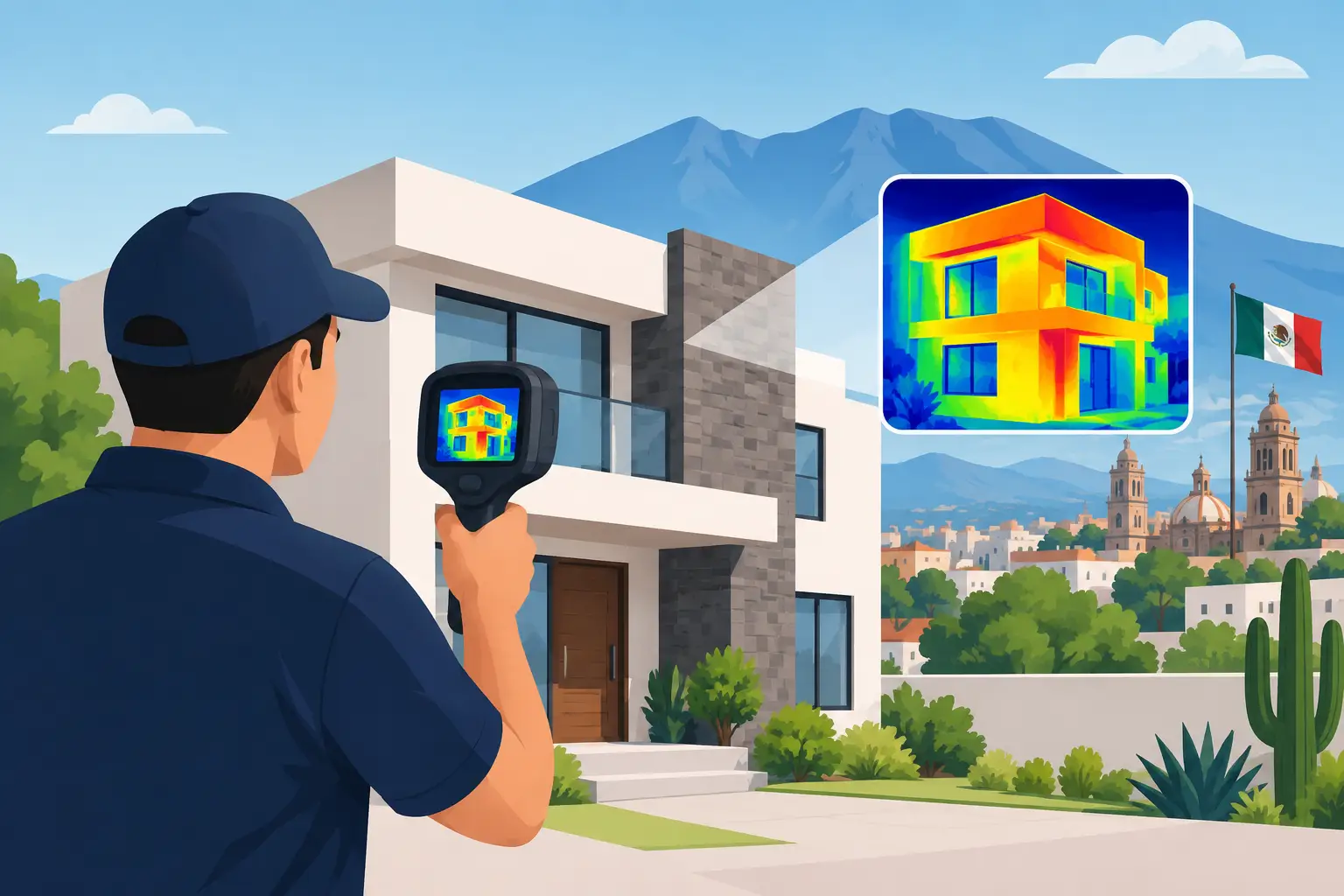
A thermal camera does not see through walls or directly detect moisture. It reads infrared radiation and translates surface-temperature differences into a color image. Those differences can point an experienced inspector toward conditions that may require confirmation with a moisture meter, electrical testing, visual review, or a qualified trade professional.
For example, a cooler area on a ceiling beneath a roof deck may suggest moisture intrusion, missing insulation, or an active air-conditioning duct above. A warmer-than-normal electrical breaker, connection, or conductor can indicate resistance that needs immediate review. The camera identifies the anomaly. The inspector’s experience determines what it may mean and what should happen next.
That distinction matters. Thermal imaging is a strong diagnostic tool, not a substitute for proper construction knowledge, code awareness, and follow-up testing.
Why It Matters for Los Cabos Properties
Homes in Cabo San Lucas, San José del Cabo, Palmilla, Puerto Los Cabos, Querencia, Chileno Bay, Pedregal, Diamante, Campestre, and the East Cape operate in conditions that place real demands on building systems. A home can face direct solar exposure for much of the day, high air-conditioning use, wind-driven rain, ocean humidity, and salt exposure that can accelerate corrosion at exterior components and connections.
These conditions do not mean a property has problems. They do mean that careful inspection is worth the time. In a high-value residence, a small issue around a roof penetration, exterior wall transition, sliding-door opening, or mechanical line can become more expensive when it is left unaddressed.
Thermal imaging is especially useful when reviewing homes that have been vacant, recently renovated, or heavily used as rentals. It can also help owners establish a practical baseline before a major renovation, solar installation, pool redesign, or new furnishing package makes access more difficult.
Moisture Around Roofs, Walls, and Openings
Flat roofs, terraces, parapet walls, skylights, roof drains, and exterior penetrations all require correct detailing and maintenance. In the right weather conditions, thermal imaging may identify unusually cool or warm areas associated with moisture or insulation discontinuities.
A camera reading alone is never enough to label a roof leak. Sun exposure, shade, material type, and the time of day can all affect surface temperatures. Still, when a thermal pattern aligns with staining, elevated moisture readings, cracked sealant, or known roof details, it gives the owner a much better basis for targeted repair.
Electrical Heat Before It Becomes a Larger Problem
Electrical panels and connections should operate within expected temperature ranges. Excess heat can be caused by a loose connection, overloaded circuit, corrosion, damaged component, or an equipment issue. In a coastal environment, exterior electrical components deserve particular attention.
A thermal scan can help prioritize electrical concerns that may not be obvious during a visual review. If an abnormal heat signature is found, a qualified electrician should evaluate the circuit and make repairs based on safe testing procedures. This is one area where a quick, documented response can protect both the home and its occupants.
Air-Conditioning, Ductwork, and Insulation Gaps
Reliable cooling is part of the lifestyle and operating cost of a Los Cabos home. Thermal imaging can help identify areas where conditioned air may be escaping, where ductwork may be underperforming, or where insulation is inconsistent. It can also help locate unusual temperature differences near air handlers, condensate lines, and supply registers.
Results depend on conditions. The greatest contrast is often available when the home has been cooled for a period of time and exterior temperatures are significantly different from the interior. A well-planned inspection considers these conditions rather than treating the camera as a one-size-fits-all test.
When to Schedule a Thermal Imaging Home Inspection in Mexico
The best timing depends on your purpose. Buyers should consider thermal imaging during the due-diligence period, while there is still time to understand repair needs, request documentation, or negotiate based on verified conditions. For a resale home, this can provide far more insight than a walkthrough alone.
Owners planning a renovation should schedule an inspection before design and demolition decisions are finalized. A thermal review may reveal a moisture concern, electrical issue, or mechanical limitation that should be included in the project scope from the beginning. Addressing these items early is usually more efficient than uncovering them after finishes have been removed or new work has started.
For newly completed homes, a pre-delivery inspection provides a useful quality-control checkpoint. It should be paired with a detailed visual review of finishes, drainage, waterproofing details, mechanical systems, electrical installation, and the project’s applicable code requirements. A thermal camera is one tool in that larger process.
What a Professional Inspection Should Include
A worthwhile inspection is not simply a technician walking through the home with a camera and sending colorful images afterward. The report should explain what was observed, where it was observed, the likely significance, and the recommended next step. Clear photos, thermal images where relevant, and location-specific notes make the findings useful for owners who may be managing the property from the United States or Canada.
The inspection should also be realistic about access and limitations. Furniture can block walls. Roof areas may be inaccessible. Some moisture conditions only appear after rain, while some thermal differences are less visible during certain times of day. A professional should state these limits clearly rather than overpromise what the equipment can prove.
For a large residence, the inspection may include key interior spaces, ceilings, exterior walls, roof-accessible areas, electrical panels, air-conditioning equipment, garages, utility rooms, and selected pool or outdoor-kitchen systems. The final scope should match the property and the reason for the inspection.
Questions Buyers Should Ask Before Hiring an Inspector
Start by asking whether the inspector uses thermal imaging as part of a complete home inspection or as a separate scan. You want someone who understands construction systems and can distinguish a normal temperature variation from a condition that needs attention.
Ask how findings are confirmed. A strong answer may include moisture-meter readings, visual evidence, electrical evaluation, or referral to the appropriate licensed or qualified specialist. Also ask what the report includes, how quickly it will be delivered, and whether the inspector can coordinate follow-up repairs when issues are found.
For foreign owners, communication is part of the service. The right team should be able to explain findings in clear English, prioritize concerns by urgency, and provide practical next steps. You should not be left with a technical report and no plan for resolving what it identifies.
The Value Is in the Follow-Through
Thermal imaging earns its value when it helps an owner act before a manageable issue becomes a disruptive repair. It can support smarter negotiations, more accurate renovation budgets, and better preventive maintenance. It can also provide reassurance when the scan supports the visual condition of the home.
At Custom Homes Mexico, our in-house construction and trade teams understand how to translate inspection findings into practical repair, renovation, electrical, mechanical, waterproofing, and solar recommendations. That one-stop-shop approach gives owners a direct path from discovery to documented action, with the communication and accountability expected from a North American-led team.
Before you close on a home or begin a major upgrade, arrange an inspection that looks beyond polished finishes. The right information now can protect your investment, your schedule, and your peace of mind long after you receive the keys.