A drain can appear to work perfectly during a showing, then become an expensive problem after closing or midway through a renovation. A sewer camera inspection Los Cabos property owners arrange before major decisions gives them something more useful than assumptions: a clear look inside the lines serving the home.
For owners managing a property from the United States or Canada, that visibility matters. A blocked, cracked, poorly sloped, or improperly connected drain line can affect bathrooms, kitchens, outdoor showers, pool areas, and guest casitas. The right inspection helps identify what is below grade before landscaping, hardscape, cabinetry, or new finishes make repairs far more disruptive.
Why a Sewer Camera Inspection Los Cabos Matters
Los Cabos homes are built in conditions that deserve careful planning. Rocky terrain, salt air, seasonal rain events, large outdoor living areas, and the frequent addition of pools or casitas can all influence drainage design and long-term performance. In established communities such as Palmilla, Puerto Los Cabos, Querencia, Pedregal, Diamante, and the East Cape, homes may also have been altered over time by different owners and contractors.
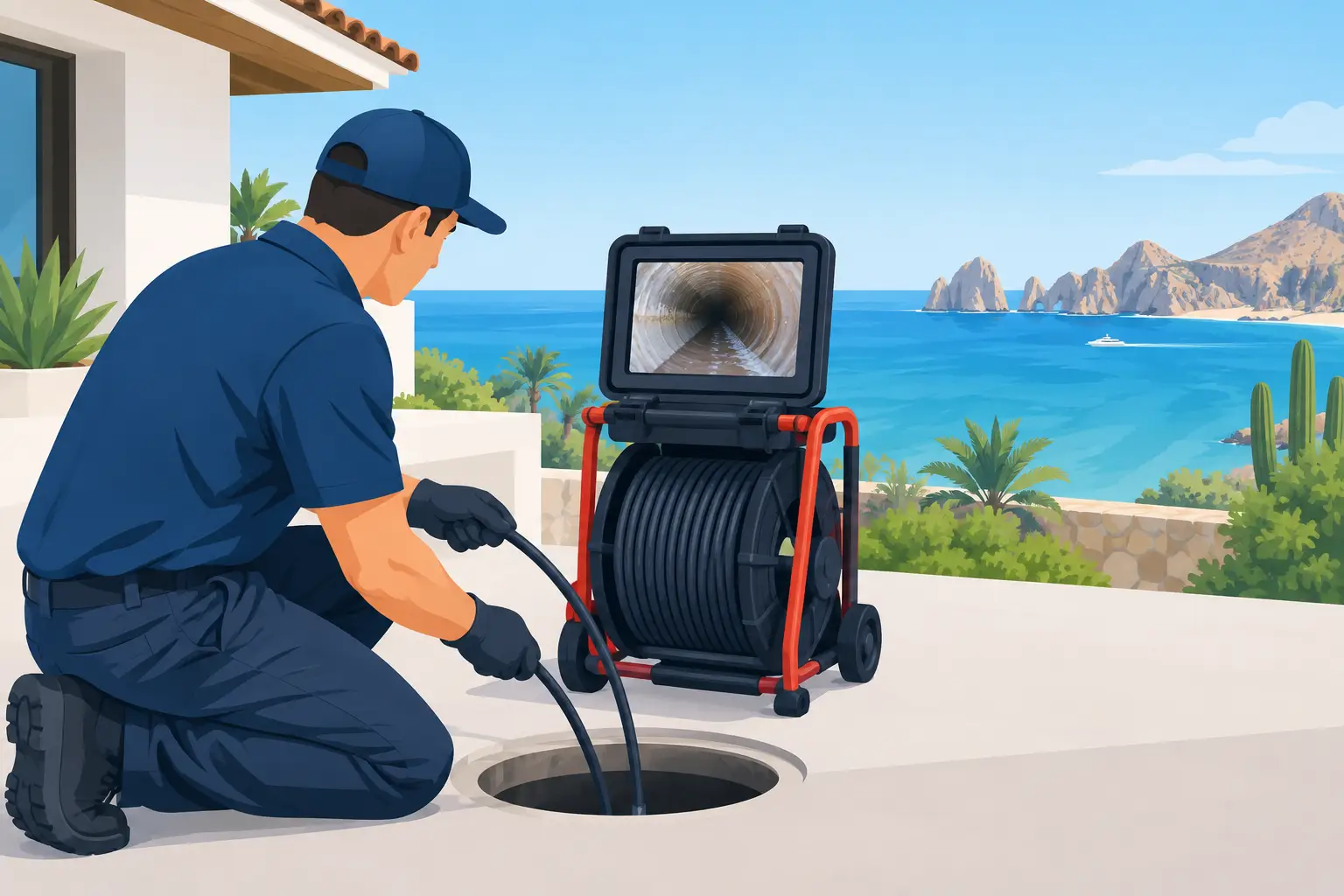
A sewer camera inspection is a practical diagnostic service. A trained technician feeds a flexible, high-resolution camera through accessible drain cleanouts or plumbing openings. The live video shows the interior condition of the pipe and helps locate obstructions, root intrusion, separated joints, cracks, construction debris, standing water, or lines with incorrect slope.
This is not simply about finding a clog. A clog can often be cleared. The more significant question is why it formed and whether the line has a condition that will return. For a luxury home, repeated backups are not just inconvenient. They can damage finishes, interrupt rental occupancy, create sanitation concerns, and undermine confidence in a property investment.
When to Schedule an Inspection
The best time for a camera inspection depends on the property and the work being considered. It is especially valuable before purchasing an existing home, before starting a substantial renovation, and when a home has slow drains or recurring backups. It is also a smart step before adding a casita, outdoor kitchen, new bathroom, pool house, or other feature that increases demand on the plumbing system.
During a pre-purchase inspection, camera footage can reveal conditions a visual walkthrough cannot. Fresh paint, attractive landscaping, and updated interior finishes do not show what is happening under a slab or beneath a driveway. If concerns are found early, buyers can request repairs, adjust their budget, or make an informed decision before taking ownership.
For remodeling projects, the inspection supports better design and engineering coordination. Relocating a kitchen island, adding a powder room, or changing a primary suite layout may require new waste lines and venting. Knowing the existing pipe routes, materials, and condition helps the construction team plan the work accurately instead of discovering limitations after demolition begins.
An inspection is also worthwhile when a property has been vacant for extended periods. Vacation homes can have dry traps, unnoticed leaks, debris buildup, or drainage issues that did not receive immediate attention. A proactive review before the owner arrives for the season can prevent a service call from becoming an emergency.
What the Camera Can Show
The video inspection creates a direct record of pipe conditions, but the results need experienced interpretation. A camera can identify visible defects and help determine their location. It cannot always confirm every issue by itself, particularly if a line is completely blocked, inaccessible, or concealed behind a failed section. In those cases, additional testing or targeted excavation may be necessary.
Common findings include grease accumulation from kitchen lines, scale buildup in older pipes, construction material left in drains, broken fittings, offset joints, and bellies where a pipe has settled and holds water. In some properties, an improperly installed line may have insufficient slope, causing solids to remain in the pipe rather than flow toward the appropriate disposal system.
The footage can also help distinguish between a localized maintenance issue and a larger repair concern. A small buildup near an accessible cleanout may be resolved through professional cleaning. A cracked line under a finished terrace is a different conversation, requiring scope planning, cost analysis, and careful coordination to protect the property.
The Value of Clear Documentation
For international owners, communication is as important as the inspection itself. A useful sewer camera inspection should include a straightforward explanation of what was found, where it was found, and what repair options make sense. Photos, video clips, pipe location details, and a written recommendation give owners a record they can review remotely and use when making decisions with their architect, property manager, or contractor.
Not every finding requires immediate replacement. That is where judgment matters. Minor buildup may call for cleaning and a maintenance schedule. A line with early wear but no active failure may be monitored, especially if access for future repair is simple. A compromised main drain beneath a planned renovation area, however, is often best addressed while the site is already open.
The trade-off is straightforward: proactive repairs can add cost to a current project, but they may avoid much higher costs later. Opening finished flooring, removing custom cabinetry, disturbing pool decking, or repairing water-damaged interiors is rarely the preferred way to discover a drainage problem.
Coordinating Inspection With Renovation or Construction
A one stop shop approach is particularly valuable when drainage findings affect a broader project. The plumber who identifies the concern should be able to communicate directly with the construction manager, designer, engineer, and site team. That coordination avoids the common problem of a repair being completed without considering future layouts, structural conditions, waterproofing, or finish restoration.
For example, a homeowner may plan to convert an underused terrace into an outdoor kitchen and dining area. If the camera inspection reveals a compromised line in that location, the repair can be integrated into the construction schedule before new stone, cabinetry, lighting, and landscaping are installed. The work becomes part of the plan rather than an interruption after completion.
Custom Homes Mexico coordinates inspections and corrective work through an established in-house team of plumbers, electricians, engineers, designers, and specialty trades. That operational control supports the standards many U.S. and Canadian owners expect: clear scope, accountable scheduling, code-conscious execution, and communication from one responsible team.
Choosing the Right Inspection Partner
A camera is only one tool. The quality of the result depends on the technician, the condition assessment, and the contractor’s ability to provide a realistic next step. Look for a team that can explain findings in plain language without immediately pushing the most expensive solution.
Ask whether the inspection includes recorded footage, whether pipe locations can be identified, and whether the technician will distinguish between maintenance recommendations and repair requirements. If a repair is proposed, request a clear scope that addresses access, restoration of affected finishes, timing, and potential contingencies. On a high-value home, a vague plumbing proposal can create avoidable budget uncertainty.
It is also wise to confirm that any corrective work will be coordinated with the home’s overall systems. Drainage, water supply, venting, electrical requirements, waterproofing, and structural elements often intersect in renovations. The lowest initial service price is not always the best value if the provider cannot manage those connections responsibly.
A sewer camera inspection is a modest step compared with the cost of buying, renovating, or maintaining a Los Cabos home, yet it can prevent a hidden line from dictating your schedule later. Before you close on a property, begin demolition, or add new living space, ask for a clear view below the surface and a team prepared to act on what it finds.