
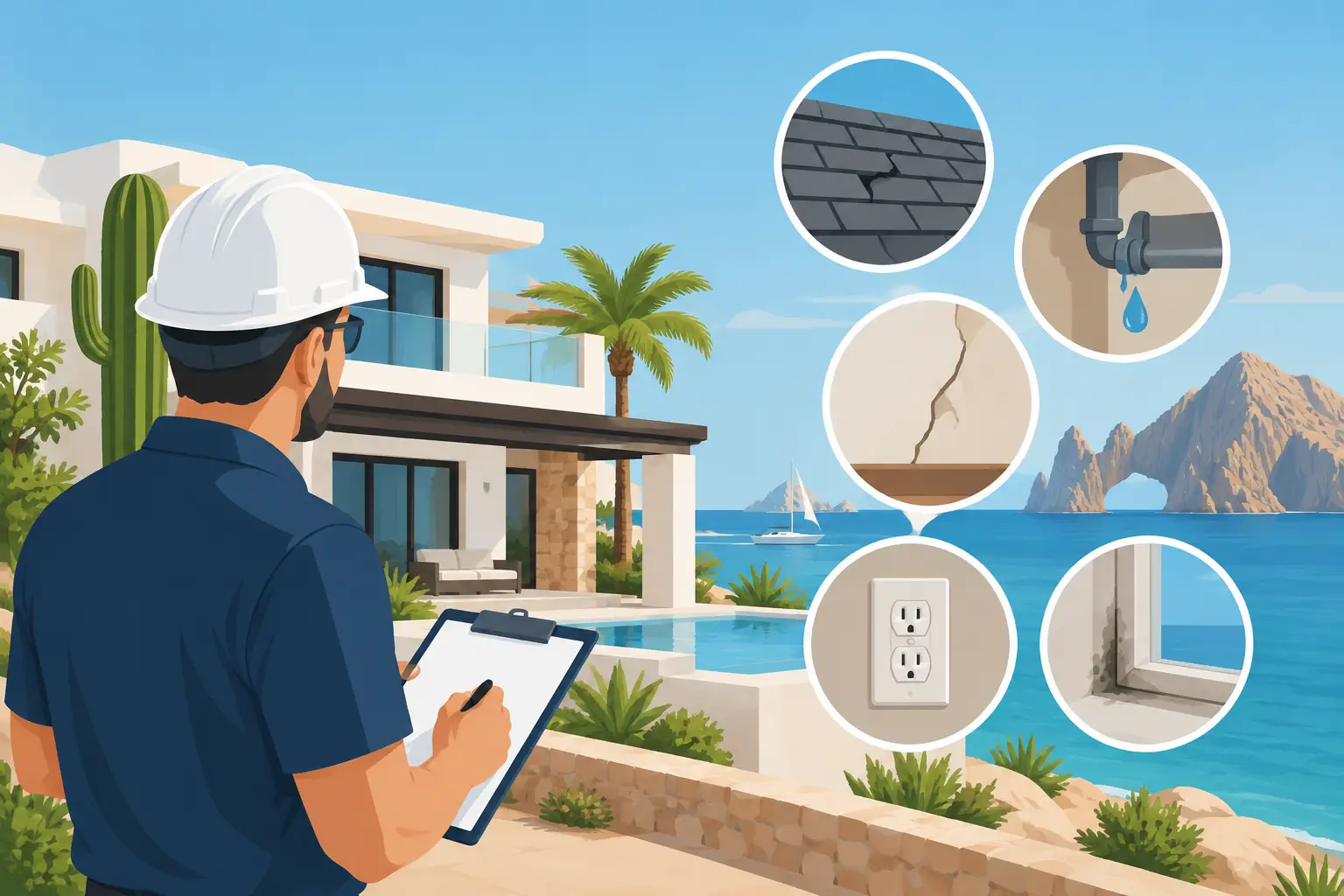
A beautiful ocean view, new finishes, and a respected community address can make a Los Cabos property feel like an easy decision. But what inspection defects matter most is rarely answered by a quick walk-through. The issues that deserve real attention are the ones that affect safety, structural performance, water management, long-term operating costs, and your ability to enjoy the home without a series of expensive surprises.
For a buyer, investor, or owner planning a renovation, an inspection should do more than create a list of cosmetic corrections. It should help you understand which findings need action now, which should influence the price or scope of work, and which can be monitored as part of normal ownership.
What Inspection Defects Matter Before You Buy?
The most significant defects are those that can compromise the home, create ongoing damage, or indicate that major systems were poorly designed, installed, or maintained. In coastal Baja California Sur, heat, salt air, intense sun, seasonal rain, and occasional storm exposure make certain inspection items especially relevant.
A small crack in paint may be a normal finish issue. A crack that continues through masonry, appears near openings, or is paired with uneven floors, sticking doors, or visible separation deserves a closer review. The difference is context. An experienced inspector and contractor should look at the location, pattern, width, and history of the movement before deciding whether it is cosmetic or structural.
The same principle applies throughout the house. A missing outlet cover is simple. Repeated electrical irregularities, exposed conductors, overheated panels, or undersized equipment are not. The goal is not to reject a home because it has a punch list. It is to identify problems that can change the true cost, safety, or feasibility of ownership.
Structural Movement and Concrete Concerns
Concrete construction is common in Los Cabos, and it can perform exceptionally well when it is properly engineered and executed. Still, concrete is not automatically problem-free. Cracking, spalling, exposed reinforcement, poor drainage at foundations, and visible settlement should be evaluated with care.
Hairline shrinkage cracks may be routine, particularly in plaster or stucco finishes. Wider, diagonal, stepped, or recurring cracks can point to movement that needs professional review. This is particularly true when cracks appear around columns, beams, retaining walls, roof slabs, pool structures, or areas where the property has been altered.
Look beyond the main house. Hillside lots, elevated terraces, exterior stairs, detached casitas, perimeter walls, and outdoor kitchens all need to be assessed as part of the property. Luxury homes in Palmilla, Puerto Los Cabos, Querencia, Chileno Bay, Pedregal, Diamante, Campestre, and the East Cape often include substantial exterior construction. These elements are exposed to the same weather and drainage pressures as the residence, and repairs can be significant when access is difficult or finishes are specialized.
A structural concern does not always mean the transaction should stop. It may mean you need an engineer’s opinion, a defined repair scope, and a realistic allowance before moving forward. Clear information gives you leverage and protects your investment.
Water Intrusion Is Rarely a Minor Issue
Water is one of the most expensive inspection findings because it can travel behind finishes and remain hidden until damage is advanced. Roofs, parapet walls, skylights, windows, doors, balconies, planters, showers, and pool-adjacent walls are all common areas to review.
In Cabo, a roof that looks acceptable in dry weather may still have failed flashing, aging waterproofing, poor slope, blocked drains, or penetrations that leak during heavy rain. On a flat-roof home, ponding water, cracked coatings, deteriorated seals, and neglected drainage are worth immediate attention. A roof repair may be manageable; widespread waterproofing failure beneath tile, decks, or solar equipment can become a larger project.
Inside, watch for staining, bubbling paint, swollen cabinetry, soft drywall, mildew odor, corroded fixtures, or unexplained repairs. These do not prove an active leak on their own, but they justify further investigation. Sellers sometimes repaint before listing, so an inspection should include moisture testing where conditions suggest previous intrusion.
Bathrooms deserve the same discipline. Loose tile, failed grout, leaking shower pans, inadequate waterproofing, and improperly sloped floors can allow water into adjacent walls and lower-level ceilings. Decorative stone and high-end fixtures do not compensate for poor installation behind the surface.
Electrical Defects That Affect Safety and Reliability
Electrical systems should be inspected for both safety and capacity. A home can have attractive lighting and modern switches while still lacking proper grounding, overload protection, panel labeling, or code-compliant connections.
Serious concerns include damaged insulation, open junction boxes, improper splices, corrosion inside panels, overloaded circuits, incorrect breaker sizing, and equipment installed where water exposure is likely. Outdoor circuits, landscape lighting, pool equipment, roof equipment, and generators require particular attention in a coastal environment.
Capacity matters, too. Many owners add air conditioning, pool heating, electric kitchen equipment, EV charging, solar systems, or expanded outdoor entertaining areas after purchase. If the existing service and distribution equipment cannot support the intended load, the upgrade may involve more than changing a panel. It can require redesigned circuits, new conduit runs, coordination with utility requirements, and careful work around finished spaces.
For foreign owners, this is one area where a North American standard of documentation is valuable. You should be able to understand what equipment serves the home, where the shutoffs are, and what upgrades were made. Clear labeling and practical communication are part of quality control, not an extra.
Plumbing, Drainage, and Mechanical Systems
Plumbing defects can be disruptive even when they are not immediately visible. Low water pressure, slow drains, leaking valves, corroded connections, poor pipe support, and failing water heaters should all be reviewed. A pressure test and careful inspection of accessible plumbing can reveal conditions that a visual review alone may miss.
Drainage is equally important. Water should move away from the house, terraces, retaining walls, and pool equipment areas. Standing water near foundations, clogged roof drains, undersized scuppers, or poorly graded hardscape can create repeated maintenance issues and contribute to water intrusion.
Air conditioning should be assessed for age, performance, drainage, electrical connections, and service access. In Los Cabos, cooling is not a luxury add-on. It is a core system that affects comfort, humidity control, and operating costs. If an aging system is barely keeping up, budget accordingly rather than assuming it only needs a routine service.
Pool and Outdoor Living Defects
A pool inspection should cover more than water clarity. Cracks, tile loss, deteriorated coping, leaks, damaged plaster, failing pumps, poor filtration, unsafe electrical connections, and inadequate drainage can all affect cost and safety. Pool equipment that has been exposed to salt air and sun may require replacement sooner than expected, especially if maintenance records are unclear.
Outdoor kitchens, fire features, shade structures, railings, exterior lighting, and gates should also be reviewed. These are major parts of the Los Cabos lifestyle, yet they are often where shortcuts become visible first. Loose railings, corroded fasteners, unfinished gas connections, and water-damaged cabinetry should be treated as functional defects, not simply cosmetic items.
Code Compliance and Unpermitted Changes
Not every older feature will match current code requirements. That does not automatically make it unsafe or unacceptable. The key question is whether a condition creates a real hazard, limits insurability, complicates a remodel, or signals work that was completed without appropriate planning and oversight.
Unpermitted additions, altered structural walls, modified electrical systems, enclosed terraces, and poorly executed rooftop additions deserve special attention. A renovation may be possible, but correcting previous work can add time and cost to the project. Before committing to a purchase or major remodel, confirm what was built, what was changed, and what the property can reasonably support.
Separate the Urgent From the Manageable
A useful inspection report ranks findings by consequence rather than treating every item equally. Safety issues, active water intrusion, structural concerns, major electrical defects, and failing essential systems should be addressed first. Then come items that may not be urgent but could become costly if delayed, such as roof coating near the end of its life or aging HVAC equipment.
Cosmetic corrections, minor hardware repairs, paint touch-ups, and small finish cracks can be planned around your move-in schedule. The mistake is allowing a long list of minor items to distract from two or three major conditions that truly affect value.
Custom Homes Mexico approaches inspections with the same hands-on accountability used in design, construction, renovations, pools, and solar work. With in-house trade coordination and practical knowledge of local conditions, the focus is on explaining the scope clearly, identifying the right repair path, and helping owners make decisions with confidence.
The right inspection does not need to make a property feel risky. It should make the next step clearer: negotiate with facts, plan upgrades realistically, and move ahead with a team that can turn identified defects into a well-managed solution.