A Los Cabos construction site can change meaningfully between your visits. Concrete gets poured, mechanical systems disappear behind walls, and finish selections turn into permanent decisions. That is why learning how to coordinate remote construction is less about watching every daily activity and more about creating a clear system for decisions, verification, and accountability before work begins.
For U.S. and Canadian owners building a custom home in Palmilla, Puerto Los Cabos, Querencia, Chileno Bay, Pedregal, Diamante, Campestre, or the East Cape, the right local team makes distance manageable. The wrong arrangement can turn a dream home into a series of unclear updates, surprise allowances, and expensive corrections discovered too late.
How to Coordinate Remote Construction Before Breaking Ground
Remote coordination starts well before excavation. A detailed design-build process gives the owner, architect, engineers, and construction team one approved direction. Plans should be sufficiently developed to define the home’s layout, structural requirements, electrical loads, plumbing routes, pool equipment, exterior materials, and major finish level before the project is priced and scheduled.
Luxury homes in Los Cabos often include features that require early coordination: large pocket doors opening to ocean views, shade structures, infinity-edge pools, outdoor kitchens, solar systems, whole-home backup power, smart-home controls, and imported appliances. Each one affects structure, drainage, electrical capacity, waterproofing, or mechanical planning. Leaving these choices until construction is underway may create delays or change orders.
Ask your builder to identify what is included in the construction scope, what remains an owner selection, and what allowance amounts apply. An allowance is useful when a final product has not been selected, but it should not become a catch-all category. You should understand the assumed price level, lead time, and installation requirements for every significant allowance.
A realistic budget also needs a contingency. This is not a sign that the builder lacks confidence. It is a practical reserve for conditions that cannot be fully known until work begins, owner-directed upgrades, or supply changes. The appropriate amount depends on the condition of the site, the maturity of the plans, and how many materials are being sourced from outside Baja California Sur.
Choose One Accountable Team on the Ground
The most effective remote projects have a single point of accountability. When owners separately manage an architect, engineer, general contractor, pool company, solar installer, and a rotating group of subcontractors, no one fully owns the coordination between systems.
That gap is where problems develop. The electrician may need information from the lighting designer. The pool technician may need a confirmed location for equipment before the landscape plan is finalized. The structural engineer may need to approve a revision before framing continues. If these decisions pass through several disconnected parties, progress can slow and responsibility can become unclear.
A full-service builder with an established in-house workforce can coordinate those decisions directly. Architects, calculation engineers, electricians, plumbers, carpenters, designers, pool technicians, solar engineers, and specialty trades should work from the same construction plan and schedule. This gives the owner a clearer line of communication and helps protect the project from handoff errors.
At Custom Homes Mexico, the objective is straightforward: one team that can manage the work from planning through final delivery while keeping the owner informed. For a remote client, this is more than convenience. It is a practical form of quality control.
Set a Reporting Rhythm You Will Actually Use
Daily messages can create noise without providing useful oversight. Monthly updates may leave too much time between important decisions. Most remote custom-home projects benefit from a consistent reporting rhythm that matches the construction phase.
During active structural work, weekly reports are often appropriate. During early design, permitting, or long-lead procurement, reports may be less frequent but should be tied to specific milestones. The important point is that the owner knows when to expect information and who will respond when a decision cannot wait.
A useful construction update should cover five areas:
- Work completed since the prior report
- Work planned for the next reporting period
- Current schedule status and any cause of delay
- Budget items, approved changes, and upcoming payment milestones
- Photos or video that show progress, details, and areas needing owner input
Photos matter, but quantity is not the goal. Request images that help you verify actual work: reinforcement before concrete placement, waterproofing before tile, plumbing and electrical rough-in before drywall or finishes, and completed details at close range. Wide shots show progress; close shots show workmanship.
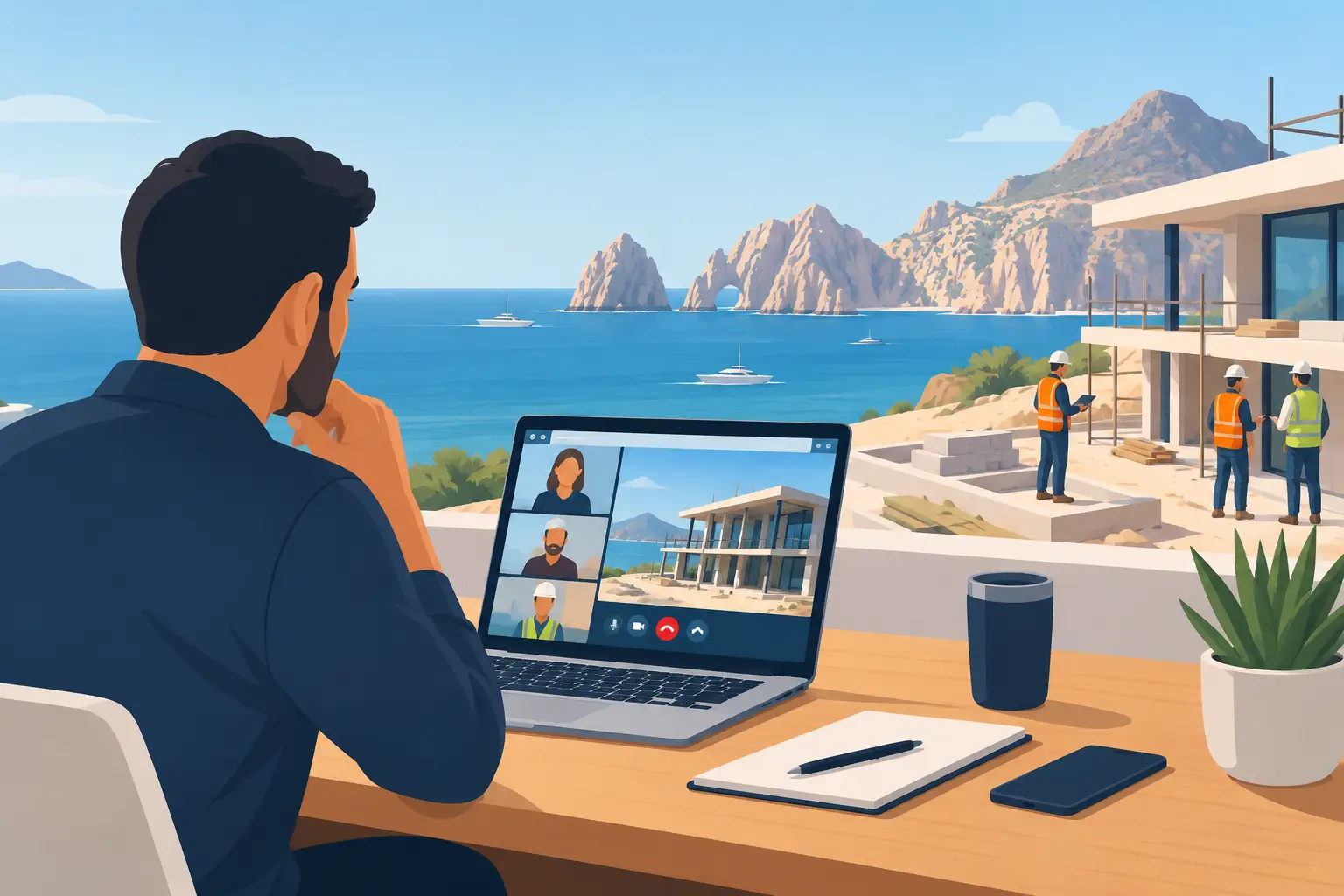
Video calls are especially valuable at decision points. A 20-minute walkthrough can resolve a question about cabinet layout, fixture placement, sightlines, or a material transition faster than a long email chain. Agree in advance on how approvals are documented after the call. A verbal decision should be followed by a written confirmation so the project record remains clear.
Build Quality Checks Into the Schedule
A finished home can look beautiful while concealing problems behind walls, under tile, or below grade. Remote owners should not rely on a final walkthrough as their only quality check. The highest-value inspections happen at stages when corrections are still practical.
For a Los Cabos home, key review points typically include site preparation and drainage, foundations and structural reinforcement, concrete placement, roof and terrace waterproofing, plumbing pressure tests, electrical rough-in, pool shell and equipment installation, exterior envelope work, and final commissioning of major systems.
The exact sequence depends on the design and local community requirements. A home in a controlled luxury development may have architectural review rules, construction hours, delivery restrictions, and inspection procedures that affect the schedule. A project on the East Cape may require different planning for access, utilities, water storage, or material delivery. Good coordination accounts for these realities before they become jobsite interruptions.
Ask how the builder verifies work against approved plans and applicable code requirements. For international owners, it is reasonable to seek a team that understands U.S. and Canadian expectations for safety, workmanship, electrical planning, and documentation while building appropriately in Mexico. Qualified trade leadership and experienced engineering coordination are not optional details on a high-value home.
Control Changes Without Stopping the Project
Changes are normal in custom construction. The goal is not to eliminate them. The goal is to make each one visible before it affects cost, timing, or related work.
Use a written change-order process. Every requested change should describe the scope, price impact, schedule impact, and approval status. If a revised shower layout requires additional plumbing, glass, tile, waterproofing, and framing, the full effect should be reviewed together rather than appearing as several disconnected charges later.
Some decisions have a short window. Choosing a different appliance package after cabinetry is fabricated, for example, can require rework. Changing exterior lighting after landscape conduit is buried can add time and cost. Your construction team should flag these deadlines early and explain the trade-off in plain language.
Remote owners also benefit from a decision calendar. This is a simple schedule showing when selections must be finalized for flooring, plumbing fixtures, lighting, millwork, paint, appliances, pool finishes, and outdoor furnishings. It prevents a beautiful design from being delayed by one missing approval.
Plan Procurement for Cabo, Not for Your Home Market
Material availability in Los Cabos does not always follow the same pattern as a major U.S. or Canadian city. Imported products can involve manufacturing time, freight coordination, customs processes, and seasonal delivery constraints. Locally available alternatives may offer better timing, easier warranty service, and lower replacement risk, but the design intent and quality level still need to be protected.
This is where a builder’s local buying experience adds value. Ask which items are long-lead, when they must be ordered, where they will be stored, and who confirms they arrived in good condition. Appliances, specialty doors, custom windows, stone, lighting, plumbing fixtures, solar equipment, and pool components deserve particular attention.
There is no single right answer between imported and locally sourced materials. A statement piece may justify the extra logistics. For components that will require service over many years, local support and readily available replacement parts may be the smarter choice.
Visit at the Moments That Matter Most
You do not need to be in Los Cabos every week to be an engaged owner. Still, if your schedule allows, plan visits around milestones rather than random dates. A visit after framing and rough-ins can help confirm room proportions, views, lighting locations, and outdoor-living flow. A later visit when finishes, cabinetry, and tile are in progress can help resolve aesthetic details before final installation.
If travel is not possible, schedule a live virtual walkthrough at those same points. Request that the site manager move slowly, show dimensions when relevant, and compare completed work to the approved plan. The goal is not to micromanage the crew. It is to make informed decisions while they still have value.
A remote build succeeds when the owner has visibility without having to become the project manager. Choose a local construction partner that communicates directly, documents decisions, coordinates its trades, and treats every inspection point as an opportunity to protect your investment. With trust, communication, and value established from the start, your Los Cabos home can move forward on time and on budget while you remain confident in the work taking place on the ground.