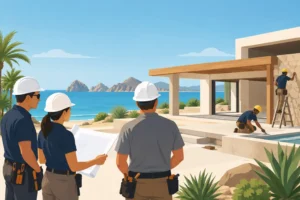
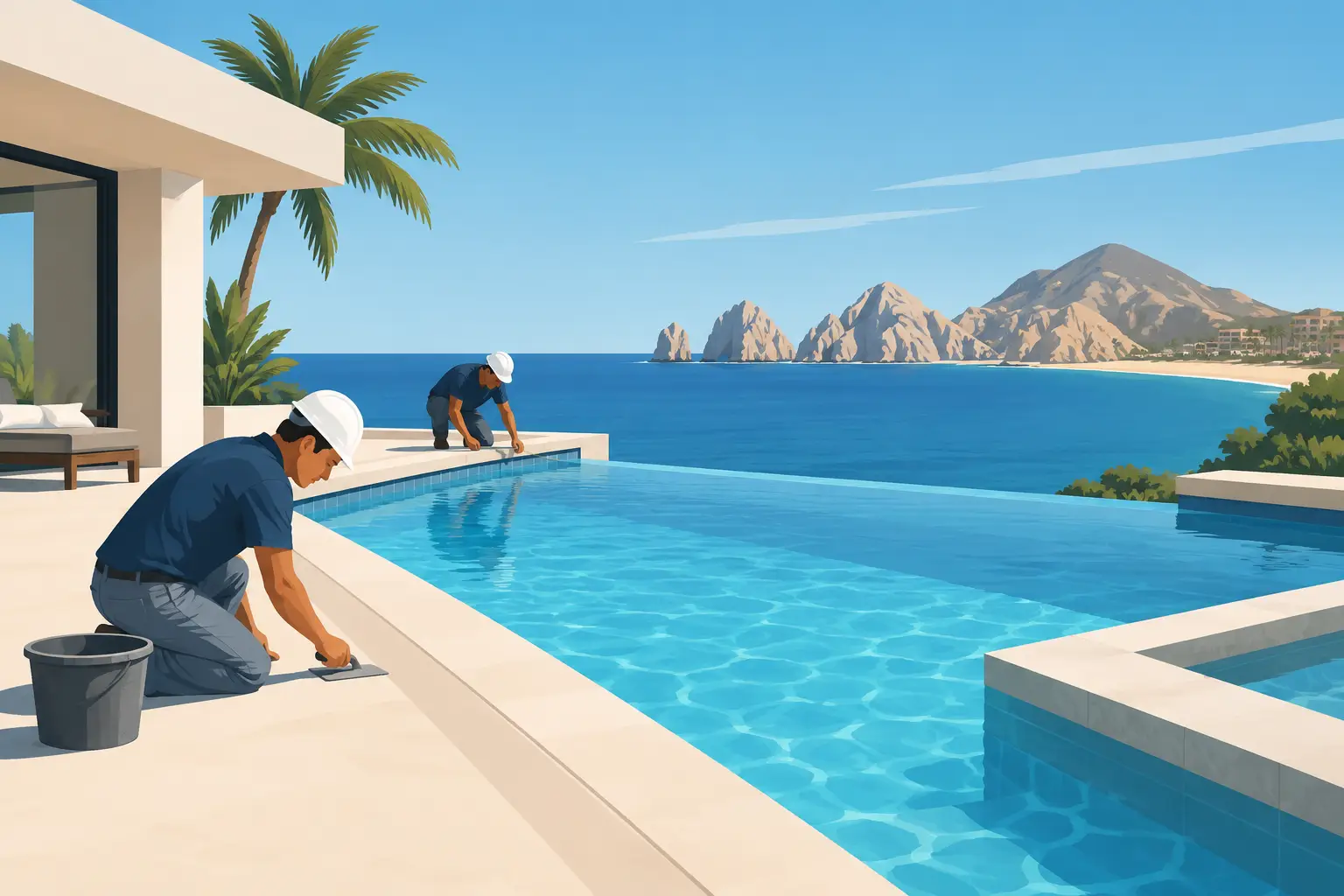
A pool is rarely an accessory at a Los Cabos home. It is the center of the terrace, the view, the entertaining area, and often the first feature guests see from inside the residence. That is why pool construction Los Cabos should be approached as a fully engineered part of the home, not a separate landscape project added after the major decisions have already been made.
For owners building from the U.S. or Canada, the challenge is not finding a pool shape online. The real work is coordinating structure, waterproofing, hydraulics, electrical systems, equipment access, finishes, drainage, and the outdoor lifestyle you want to enjoy. A beautiful pool that is difficult to maintain, undersized for the property, or poorly coordinated with the home can become an expensive frustration. The right planning creates a pool that performs well in Cabo’s sun, wind, salt air, and seasonal weather while complementing the architecture for years to come.
Pool Construction in Los Cabos Starts With the Site
Every successful pool begins with a close look at the lot. Ocean-view properties in Palmilla, Puerto Los Cabos, Querencia, Chileno Bay, Pedregal, Diamante, Campestre, and the East Cape can have dramatic grades, rock conditions, limited access, and tight community requirements. Those conditions affect the excavation approach, structural design, retaining walls, equipment location, drainage, and construction schedule.
The pool should be designed with the home rather than placed into leftover space. A vanishing edge may frame an ocean horizon beautifully, but it requires a properly sized surge or catch basin, precise structural work, and room for service access. A raised spa can create a strong architectural focal point, though it adds hydraulic complexity and heating considerations. A simple rectangular pool may offer the best value for a rental-focused property, especially when it is paired with a generous Baja shelf, shaded seating, and durable finishes.
Orientation matters as much as shape. Afternoon sun, prevailing wind, privacy from neighboring homes, and the view from primary living spaces all influence how often the pool will actually be used. A thoughtful design also considers where people will enter from the house, where towels and food will be staged, and whether the pool deck has enough space for loungers without feeling crowded.
Engineering Comes Before Tile and Water Features
The finish work receives attention because it is visible. The structural and mechanical systems deserve equal attention because they determine how the pool functions over time. Pool construction should include engineering appropriate to the site, properly planned reinforcing steel, plumbing pressure testing, electrical coordination, and a waterproofing process that is not rushed to meet a cosmetic deadline.
This is especially important when a pool is integrated into a large terrace, supported near a slope, or built beside the foundation of a custom residence. Water is unforgiving. Small mistakes in slope, drainage, plumbing connections, or waterproofing can lead to failures that are far more difficult to correct after stone, tile, and landscaping are complete.
The equipment package should match the pool, not simply be whatever is available. Variable-speed pumps, correctly sized filtration, automated controls, heating options, sanitation systems, and LED lighting can all improve ownership experience. The right combination depends on pool volume, usage, local utility considerations, and whether the home will sit vacant for part of the year.
Automation is particularly useful for second-home owners. It can make it easier to monitor circulation schedules, lighting, temperature, and water features from afar. Still, technology does not replace regular professional service. Equipment must remain accessible for technicians, protected from unnecessary exposure, and installed with serviceability in mind.
Design for How You Will Use the Property
A luxury pool should support the way you live in Los Cabos. For some owners, that means a quiet lap pool with a spa and a shaded reading area. For others, it means a broad shallow shelf where children can play, a swim-up seating area, a fire feature for evening entertaining, and an outdoor kitchen steps away.
The best choices are specific to the household. A deep pool may feel impressive, but it can reduce the usable area for casual socializing. A large spa is appealing for winter evenings, yet it increases heating demand. Dark interior finishes can create striking reflective water and a stronger visual connection to the ocean, while lighter finishes may better suit a bright, resort-style setting. There is no universal best option – only the right option for your property, budget, and expectations.
Water features require the same discipline. Sheer descents, scuppers, bubblers, fountains, and fire bowls can add movement and atmosphere, but each one adds mechanical, electrical, and maintenance considerations. It is better to select a few features that are properly built and easy to operate than to overload the design with elements that complicate the system.
Decking also deserves careful attention. Pool surrounds should be comfortable underfoot, durable in the local climate, slip-conscious, and coordinated with the home’s architecture. Natural stone, porcelain, concrete finishes, and composite materials each have different cost, maintenance, heat, and visual characteristics. The material decision should be made early enough to coordinate elevations, drains, thresholds, and the transition from indoor flooring to outdoor living areas.
Budget for the Complete Outdoor Environment
A pool budget is more than excavation, concrete, tile, and equipment. On a custom project, it may also include engineering, retaining structures, drainage improvements, electrical runs, automation, heating, water features, decking, landscaping coordination, shade structures, and equipment enclosure work.
Clear scope matters. Owners should understand what is included in the initial price and what could change based on site conditions, finish selections, or community approvals. This is where transparent communication protects the investment. A lower initial number can become less attractive if it omits the systems and site work needed to deliver a finished, dependable pool environment.
Schedule coordination matters as well. The pool shell, plumbing, electrical rough-in, finish installation, deck work, and landscaping all need to happen in the right order. If the pool is part of a new custom home, its construction should be integrated into the overall project schedule from the beginning. If it is a redesign at an existing home, the contractor should plan for access, dust control, protection of finished areas, and the realities of working around an occupied property.
One Accountable Team Makes a Difference
Pool projects involve multiple trades, and the handoffs between them can determine the final result. When engineers, electricians, plumbers, finish crews, and pool technicians work from the same plan and communicate regularly, issues can be addressed before they become costly corrections.
For international owners, accountability is just as valuable as craftsmanship. You need clear updates, documented decisions, and a team on the ground that can coordinate details while you are away. Custom Homes Mexico provides a one stop shop approach with in-house professionals who can coordinate the pool with the wider home, terrace, solar planning, outdoor kitchen, renovation, or new construction scope. That operational control supports the standards, communication, and value that cross-border owners expect.
Before approving a pool design, ask to see the equipment layout, drainage plan, material selections, lighting concept, and the connection between the pool deck and the house. Confirm who is responsible for testing, start-up, owner orientation, and future service recommendations. These are practical questions, but they are the questions that protect a high-value outdoor investment.
The best time to make a pool easier to own is before construction begins. Build around the view, engineer for the site, choose features you will genuinely use, and work with a team that treats every hidden system with the same care as the waterline tile. That is how a Cabo pool becomes a reliable part of your home, not simply a beautiful photograph.